
more Mainstream Apologetics ...

Once we have established that God revealed Himself to mankind through a variety of means, we establish that Jesus is divine, the same essence as God. We observe his authoritative teaching, miracles, and likeness to the character of God. This is evidenced by eyewitness testimony, supernatural power over nature, healthy psychological assessment and accurate fulfillment of Old Testament prophecy.
It is difficult for some people to comprehend that Jesus, while being fully human, could be fully divine. Throughout his ministry, Jesus exhibited the attributes of God evidenced by his divine knowledge, divine presence and divine power. Based on standard psychological assessment methods, Jesus was found to be mentally healthy. His behavior was marked by rational thinking, not delusions. Finally, hundreds of people attested to Jesus' divinity by witnessing his authoritative teaching, many miracles, and fulfillment of prophecies. Based on these claims, the most reasonable conclusion is that Jesus is divine, the Son of God.
This conclusion is supported by the following truth claims.
Summary: Extra-biblical writers provide us with an accurate and compelling profile of Jesus. This profile is corroborated among the individual writers, and congruent with the biblical accounts. Further, many of the statements presented characterize Jesus as messianic (divine). These statements include Jesus' miracles, Jesus' fulfillment of messianic prophecies, natural phenomenon accompanying Jesus' death, the mysteriousness surrounding Christian's beliefs and finally Jesus being worshiped as a god.
This claim is supported by the following evidence.
Summary:

Cornelius Tacitus (ca. 55-120 AD) was considered the "greatest historian" in the ancient Roman empire. One of his historical publications, the Annals covered the period from 14-68 AD coincides with the life of Jesus. The Annals provides three testimonies of Jesus and first century Christians.
The Annals (15:44) written in 115 AD recounts the great Roman fire of 64 AD during the reign of Nero. In this account, we learn that Christians were falsely accused of starting the fire.
Interpretation 1: "But not all the relief that could come from man, not all the bounties that the prince could bestow, nor all the atonements Which could be presented to the gods, availed to relieve Nero from the infamy of being believed to have ordered the conflagration, the fire of Rome. Hence to suppress the rumor, he falsely charged with the guilt, and punished Christians, who were hated for their enormities. Christus, the founder of the name, was put to death by Pontius Pilate, procurator of Judea in the reign of Tiberius: but the pernicious superstition, repressed for a time broke out again, not only through Judea, where the mischief originated, but through the city of Rome also, where all things hideous and shameful from every part of the world find their center and become popular. Accordingly, an arrest was first made of all who pleaded guilty; then, upon their information, an immense multitude was convicted, not so much of the crime of firing the city, as of hatred against mankind. Such indeed were the precautions of human wisdom. The next thing was to seek means of propitiating the gods, and recourse was had to the Sibylline books, by the direction of which prayers were offered to Vulcanus, Ceres, and Proserpina. Juno, too, was entreated by the matrons, first, in the Capitol, then on the nearest part of the coast, whence water was procured to sprinkle the fane and image of the goddess. And there were sacred banquets and nightly vigils celebrated by married women. But all human efforts, all the lavish gifts of the emperor, and the propitiations of the gods, did not banish the sinister belief that the conflagration was the result of an order.
Consequently, to get rid of the report, Nero fastened the guilt and inflicted the most exquisite tortures on a class hated for their abominations, called Christians by the populace. Christus, from whom the name had its origin, suffered the extreme penalty during the reign of Tiberius at the hands of one of our procurators, Pontius Pilatus, and a most mischievous superstition, thus checked for the moment, again broke out not only in Judaea, the first source of the evil, but even in Rome, where all things hideous and shameful from every part of the world find their centre and become popular. Accordingly, an arrest was first made of all who pleaded guilty; then, upon their information, an immense multitude was convicted, not so much of the crime of firing the city, as of hatred against mankind. Mockery of every sort was added to their deaths. Covered with the skins of beasts, they were torn by dogs and perished, or were nailed to crosses, or were doomed to the flames and burnt, to serve as a nightly illumination, when daylight had expired.
Nero offered his gardens for the spectacle, and was exhibiting a show in the circus, while he mingled with the people in the dress of a charioteer or stood aloft on a car. Hence, even for criminals who deserved extreme and exemplary punishment, there arose a feeling of compassion; for it was not, as it seemed, for the public good, but to glut one man's cruelty, that they were being destroyed." [REF-TAC02]
Interpretation 2: "But all human efforts, all the lavish gifts of the emperor, and the propitiations of the gods, did not banish the sinister belief that the conflagration was the result of an order. Consequently, to get rid of the report, Nero fastened the guilt and inflicted the most exquisite tortures on a class hated for their abominations, called "Chrestians" by the populace.
Christus, from whom the name had its origin, suffered the extreme penalty during the reign of Tiberius at the hands of one of our procurators, Pontius Pilate, and a most mischievous superstition, thus checked for the moment, again broke out not only in Judaea, the first source of the evil, but even in Rome, where all things hideous and shameful from every part of the world find their center and become popular.
Accordingly, an arrest was first made of all who pleaded guilty; then, upon their information, an immense multitude was convicted, not so much of the crime of firing the city, as of hatred against mankind. Mockery of every sort was added to their deaths. Covered with the skins of beasts, they were torn by dogs and perished, or were nailed to crosses, or were doomed to the flames and burnt, to serve as a nightly illumination, when daylight had expired." [REF-TAC04]
From this passage, we learn several facts about Christians and Jesus:
Resources:
Summary:
Gaius Suetonius (ca. 69-122 AD) was the chief secretary of Emperor Hadrian (ca. 117-138 AD).
In Suetonius' greatest historical work, the The Twelve Caesars, Suetonius wrote of Emperor Claudius' actions toward Christians in Rome. In the chapter covering the reign of Claudius (ca. 41-54 AD), Claudius expelled Jewish Christians from Rome.
"Because the Jews at Rome caused continuous disturbances at instigation of Chrestus (Christ), he (Emperor Claudius) expelled them from the city."
We understand from this text that the Jewish Christians were expelled because of "disturbances". We learn from Roman history that there were riots in Rome around 49 AD. Jewish Christians were likely blamed for these disturbances. Also note, this passage coincides with Acts 18:2 where Priscilla and Aquila were among those expelled from Rome by Claudius.
"And he found a Jew named Aquila, a native of Pontus, recently come from Italy with his wife Priscilla, because Claudius had commanded all the Jews to leave Rome." (Acts 18:2 ESV)
In another passage from the Histories of Claudius, Suetonius wrote of the punishments inflicted on Christians because of the rumored connection with the great Roman fire of 64 AD. This passage is also echoed by Cornelius Tacitus [HIS-EV16].
"After the great fire at Rome, ... punishments were also inflicted on the Christians, a sect professing a new and mischievous religious belief."
From these passages, we learn several facts about Christians and Jesus:
Resources:
Summary:
Flavius Josephus (ca. 37-97 AD) was a Jewish historian and scholar that specialize in Roman-Jewish history. Josephus was born into a family of priestly and royal descent and was well educated. While in Jerusalem, he became a Pharisee at age 19.
After the destruction of Jerusalem in 70 AD, he defected and moved to Rome to serve as an interpreter and eventually the court historian for Emperor Vespasian. He was later granted Roman citizenship by Vespasian and assume Vespasian's name "Flavious".
In Josephus' greatest historical work, Antiquities of the Jews (ca. 90-95 AD), Josephus makes two references to Jesus.
In the first reference found in Antiquities (20:197), Jesus is referred to as the brother of James.
"So he (Ananus) assembled the Sanhedrin of judges, and brought before them the brother of Jesus, who was called Christ, whose name was James, and some of his companions, and when he had formed an accusation against them as breakers of the law, he delivered them to be stoned."
In the second reference found in Antiquities (18.63-64), Jesus' life, ministry, crucifixion and resurrection are described.
"Now there was about this time Jesus, a wise man if it be lawful to call him a man, for he was a doer of wonders, a teacher of such men as receive the truth with pleasure. He drew many after him both many of the Jews and many of the Gentiles. He was the Christ. When Pilate, at the suggestion of the principal men among us, had condemned him to the cross, those that loved him at the first did not forsake him, for he appeared to them alive again the third day; as the divine prophets had foretold these and ten thousand other wonderful things concerning him, and the tribe of Christians, so named from him, are not extinct at this day."
Since Josephus was a Jew and a Roman citizen loyal to the Emperor Vespasian, it is unlikely he would be written this favorably about Jesus. This debated text is regarded by many scholars as having been embellished by Christians in the church during transcription. The popular position held by scholars today is that this passage was written by Josephus with some words added, deleted or embellished. In A Marginal Jew: Rethinking the Historical Jesus, John Meier argues that the text above in BLUE was added by Christian transcribers to align Josephus' original text with the Bible [REF-JME01].
Professor Schlomo Pines from the Hebrew University in Jerusalem interpreted Josephus' 18.3.3 passage from Arabic from the tenth century. His interpretation is remarkably similar to the Latin interpretation above without the added text. The corrected version of Josephus' original text is interpreted as:
"At this time there was a wise man who was called Jesus. And his conduct was good, and he was known to be virtuous. And many people from among the Jews and the other nations became his disciples. Pilate condemned him to be crucified and to die. And those who had become his disciples did not abandon his discipleship. They reported that he had appeared to them three days after his crucifixion and that he was alive; accordingly, he was perhaps the Messiah concerning whom the prophets have recounted wonders." [REF-AWH01]
In this Arabic interpretation there is a notable exclusion of the "principal men among us" which implicates the Jewish Sanhedrin. These and other excluded embellishments make the Arabic interpretation more credible.
From the first passage and the Arabic interpretation of the second passage, we learn several facts about Christians and Jesus:
This list of extra-biblical facts from Josephus' account regarding Jesus' death and resurrection represents the heart of the Gospel message. These facts are consistent with the biblical accounts of Jesus' life, death and resurrection as recorded in the Gospels. The correspondence between these facts and the biblical accounts are provided above.
Resources:
Summary:
Thallus wrote his historical account the Trojan Wars in his histories of the Eastern Mediterranean world written in 52 AD. The works of Thallus are no longer available in their original form. However, Thallus' original works were referenced by Sextus Julius Africanus (ca. 160-240) in his historical works entitled History of the World written in 221 AD.
On the whole world there pressed a most fearful darkness; and the rocks were rent by an earthquake, and many places in Judea and other districts were thrown down. This darkness Thallus, in the third book of his History calls, as appears to me without reason, an eclipse of the sun. (ca. 221 AD)
In this passage, Africanus took exception to Thallus's explanation of the super-natural phenomena of the earth shaking and darkness as a mere eclipse. He argued that an eclipse could not have occurred during a Jewish Passover celebration during the time of a full moon.
Based on this passage, we learn a couple of facts about the death of Jesus:
These facts are consistent with the biblical account of Jesus' death as recorded in the Gospels:
And behold, the curtain of the temple was torn in two, from top to bottom. And the earth shook, and the rocks were split. ... When the centurion and those who were with him, keeping watch over Jesus, saw the earthquake and what took place, they were filled with awe and said, "Truly this was the Son of God!" (Matthew 27:51-54)
It was now about the sixth hour, and there was darkness over the whole land until the ninth hour, while the sun's light failed. And the curtain of the temple was torn in two. (Luke 23:44-45)
Resources:
Summary:
Pliny the Younger (ca. 61-113 AD) was born Gaius Plinius Caecilius Secundus. He was Roman imperial governor of Bithynia in Asia Minor from 110-117 AD under the reign of Trajan. Pliny the Younger authored hundreds of letters that later became literary works of which 247 of his letters survived and became of great historical value.
Pliny the Younger was the nephew of the Pliny the Elder (ca. 23-79 AD) who served as an author, naturalist and philosopher under Emperor Vespasian reigning from 69-79 AD.
In Pliny the Younger's tenth letter to Trajan (ca. 112 AD), he speaks of Christians in the province of Bithynia. He wrote that Christians had influenced the local culture to such a degree that pagan temples and festivals were deserted. This caused him to interrogate and persecute Christians. If Christians did not recant and turn from their faith, they were executed or tortured to obtain information about other members of the church.

Meanwhile, in the case of those who were denounced to me as Christians, I have observed the following procedure: I interrogated these as to whether they were Christians; those who confessed I interrogated a second and a third time, threatening them with punishment; those who persisted I ordered executed. For I had no doubt that, whatever the nature of their creed, stubbornness and inflexible obstinacy surely deserve to be punished. There were others possessed of the same folly; but because they were Roman citizens, I signed an order for them to be transferred to Rome.
They asserted, however, that the sum and substance of their fault or error had been that they were accustomed to meet on a fixed day before dawn and sing responsively a hymn to Christ as to a god, and to bind themselves by oath, not to some crime, but not to commit fraud, theft, or adultery, not falsify their trust, nor to refuse to return a trust when called upon to do so. When this was over, it was their custom to depart and to assemble again to partake of food--but ordinary and innocent food. Even this, they affirmed, they had ceased to do after my edict by which, in accordance with your instructions, I had forbidden political associations. Accordingly, I judged it all the more necessary to find out what the truth was by torturing two female slaves who were called deaconesses. But I discovered nothing else but depraved, excessive superstition.
I therefore postponed the investigation and hastened to consult you. For the matter seemed to me to warrant consulting you, especially because of the number involved. For many persons of every age, every rank, and also of both sexes are and will be endangered. For the contagion of this superstition has spread not only to the cities but also to the villages and farms. But it seems possible to check and cure it. It is certainly quite clear that the temples, which had been almost deserted, have begun to be frequented, that the established religious rites, long neglected, are being resumed, and that from everywhere sacrificial animals are coming, for which until now very few purchasers could be found. Hence it is easy to imagine what a multitude of people can be reformed if an opportunity for repentance is afforded. (Excerpts from Pliny the Younger to the Emperor Trajan, Letters 10.96-97)
From this lengthy passage, we learn several facts about Christians and Jesus:
We can also assume from this letter that the Christian community in 112 AD in Bithynia in Asia Minor was populous and well organized with church leaders, governance (creeds, doctrines), and standard meeting times and practices (singing hymns). The church also attracted a wide range of people and was effective at crossing socio-economic boundaries in spite of Roman laws prohibiting religious freedom.
Emperor Trajan's response supported Pliny the Younger's efforts to eradicate the Christian movement in Bithynia.
You observed proper procedure, my dear Pliny, in sifting the cases of those who had been denounced to you as Christians. For it is not possible to lay down any general rule to serve as a kind of fixed standard. They are not to be sought out; if they are denounced and proved guilty, they are to be punished, with this reservation, that whoever denies that he is a Christian and really proves it--that is, by worshiping our gods--even though he was under suspicion in the past, shall obtain pardon through repentance. But anonymously posted accusations ought to have no place in any prosecution. For this is both a dangerous kind of precedent and out of keeping with the spirit of our age.
From this we learn that "anonymously posted accusations" or heresy regarding a person's association with the Christian community should not be prosecuted. This temperance toward Christians was encouraged by other emperors such as Emperor Hadrian [HIS-EV21].
Pliny the Younger was personally involved in the interrogation of Christians. He is an eyewitness to the activities of the Christian community and therefore speaks with historical authority. Further, manuscripts of his original letters exist today.
Resources:
Summary:
Eusebius of Caesarea (ca. 275 to 339) was bishop of Caesarea in Palestine. Because of his prolific works on early church history, he is regarded as the father of church history. His reference to Hadrian's statement of the treatment of Christians is consistent with the response of Emperor Trajan to Pliny the Younger [HIS-EV20].
In one of his works, Eusebius referred to a letter written by Serenius Granianus, proconsul of Asia, to Emperor Hadrian (ca. 117-138 AD) regarding the treatment of Christians.
"I do not wish, therefore, that the matter should be passed by without examination, so that these men may either be harassed, nor opportunity of malicious proceedings be offered to informers. If, therefore, the provincials can clearly evince their charges against Christians, so as to answer before the tribunal, let them pursue this course only, but not by mere petitions, and mere outcries against Christians. For it is far more proper, if anyone would bring an accusation, that you should examine it."
From this short passage, we learn that Granianus' successor, Minucius Fundanus, was instructed by Hadrian to not accuse Christians falsely and pronounce judgement without due process of law. Accusations needed to be substantiated with credible evidence before Christians can be properly charged. This treatment of Christians is consistent with Emperor Trajan [HIS-EV20].
Resources:
Summary:
Lucian of Samosata was a second-century Greek writer. In his satirical letter The Passing of Peregrine, Lucian wrote critically about Christians (ca. 165-166 AD). This writing is the earliest reference to Jesus by a pagan writer.
The Christians, you know, worship a man to this day—the distinguished personage who introduced their novel rites, and was crucified on that account. You see, these misguided creatures start with the general conviction that they are immortal for all time, which explains the contempt of death and voluntary self-devotion which are so common among them; and then it was impressed on them by their original lawgiver that they are all brothers, from the moment they are converted, and deny the gods of Greece, and worship the crucified sage, and live after his laws. All this they take quite on faith, with the result that they despise all worldly goods alike, regarding them merely as common property.
From this passage, we learn several facts about Christians and Jesus:
Resources:
Summary:
The Talmud is a collection of the Jewish oral traditions handed down throughout the generations. It was compiled and inscribed by Rabbis Akiba and Meir between 135-200 AD. In addition to containing Jewish oral precepts for living, the Talmud also contains narrative accounts of historical events dating back to the Tannaitic period of 70 AD. Some of these accounts reference Jesus and the early Christian church. Because of the nature of the Talmud, these accounts are not favorable toward Jesus and Christians, and marshal anti-Christian propaganda to discredit the early Christian movement.
In Sanhedrin 43a, the Talmud records that Jesus was "hung" because no one came to his defense for charges of practicing sorcery and apostacy.
On the even of the Passover Yeshu was hanged. For forty days before the execution took place, a herald went forth and cried, 'He is going forth to be stoned because he has practiced sorcery and enticed Israel to apostacy. Anyone who can say anything in his favour, let him come forward and plead on his behalf.' But since nothing was brought forward in his favor he was hanged on the even of the Passover! [REF-TAL03]
From this passage, we learn several facts about Jesus:
There are many other accounts of Jesus in the Talmud and Jewish sacred writings.
Resources:
Summary:
There were many writers that cited Jesus during the first and second centuries.
Resources:
Extra-biblical writers chronicle historical events of antiquity specifically during the first and second centuries. The events they chronicle include political events, military events, cultural events, religious events and more. In the case of the early Christian church, they chronicle events that shaped the religious culture of their time.
Based on the sheer volume and trustworthiness of these historical writings, we are able to build a compelling profile of Jesus as an historic person. Specifically, we conclude from these writings that Jesus was not a mythological person but fully human. The table below summarizes the key facts regarding Jesus life based on both extra-biblical and biblical writings. Taken together, these facts form a cohesive profile of Jesus.
| Fact | Tacitus | Suetonius | Pliny the Younger | Lucian of Samosata | Thallus | Josephus | Talmud | Jesus' Disciples |
|---|---|---|---|---|---|---|---|---|
| Jesus Lived During the Reign of Tiberius | ✔ | ✔ | ||||||
| Jesus was Good & Virtuous | ✔ | ✔ | ||||||
| James was the Brother of Jesus | ✔ | ✔ | ||||||
| Jesus Performed Miracles | ✔ | ✔ | ||||||
| Jesus Fulfilled Messianic Prophesies | ✔ | ✔ | ||||||
| Jesus was Crucified on the Eve of the Passover | ✔ | ✔ | ||||||
| Jesus was Crucified under Pontius Pilate | ✔ | ✔ | ✔ | ✔ | ✔ | |||
| Darkness and Earthquake at Time of Jesus' Death | ✔ | ✔ | ||||||
| Jesus Appeared after His Resurrection | ✔ | ✔ | ||||||
| Christians had "Mischievous Superstition" Beliefs | ✔ | ✔ | ✔ | ✔ | ||||
| Christians Followed the Teachings of Jesus | ✔ | ✔ | ✔ | ✔ | ✔ | ✔ | ||
| Christians Worshiped Jesus as a God | ✔ | ✔ | ✔ | |||||
| Christianity Spread to Rome | ✔ | ✔ |
Table 1: Comprehensive Profile of Jesus from Biblical and Extra-Biblical Sources
The followings observations are made of these extra-biblical writers and writings:
Other extra-biblical texts were written by these authors that chronicle the early Christian church. While these texts do not explicitly mention Jesus, the mere fact that they reference "Christians" implies that the movement originated with Jesus or "Christ". This is indirect proof of the personhood of Jesus.
This leads to the conclusion that these ancient writings build an accurate profile of Jesus that are authentic and trustworthy. This profile is congruent with the biblical account of Jesus' life and ministry.
Further, these ancient writings characterize Jesus as divine. This is best illustrated by the messianic statements such as Jesus' miracles, Jesus' fulfillment of messianic prophecies, natural phenomenon accompanying Jesus' death, the mysteriousness surrounding Christian's beliefs and finally Jesus being worshiped as a god. These statements clearly characterize Jesus as "no ordinary man".
Resources:
Summary: The New Testament is replete with eyewitness accounts of people claiming Jesus was divine. This preponderance of direct evidence leads to the necessary conclusion that Jesus was the Son of God.
This claim is supported by the following evidence.
Summary:
The Gospel of Matthew is a record of Jesus' life and ministry as seen through the eyes of Matthew.
According to the Apostolic Father Papias of Hierapolis (ca. 60-130 AD) [REF-PAP01] and other church Fathers, the gospel was written by the apostle Matthew.
"Matthew therefore composed the oracles in the Hebrew language and each interpreted them as he was able." PAPIAS OF HIERAPOLIS, Writings of Eusebius Pamphilius, Church History 3.39 v16 [REF-EUS04]
The author's name is not contained in the text of the gospel itself. Therefore, we rely on oral tradition to determine authorship of the Gospel of Matthew.
The Gospel of Matthew is considered one of the synoptic gospels. Along with the Gospels of Luke and Mark, they form an overall or synoptic summary of the life of Jesus. Among the three synoptic gospels many of the stories and sequence of events are consistent.
Matthew was one of Jesus' twelve disciples (Matthew 10:2-4, Luke 6:14-16, Acts 1:13). Matthew, or Levi as he is referred to in the other gospels, was called by Jesus while he was collecting taxes (Matthew 9:9). The account states that Matthew "got up" and followed Jesus. It is likely that Matthew had witnessed Jesus' teachings and miracles prior to his calling.
The Gospel of Matthew was probably written sometime between 55-80 AD. Because of the similarities among the synoptic gospels, many believe that the Gospel of Matthew was influenced by the Gospel of Mark which was estimated to be written between 50-70 AD. If this were the case, the Gospel of Matthew would have been written between 60-80 AD. If the Gospel of Matthew was written independently of the Gospel of Mark, then it could have been written as early as 55-60 AD. In either case, the Gospel of Matthew was written between 22-47 years after the events occurred. This is within the lifetime of many Jews who would have also witnessed the same events.
The Gospel of Matthew, as with other Gospel authors, was composed of Jesus' sayings and accounts collected by the author for many years prior to the original manuscripts. The original autograph of the Gospel of Matthew has not been discovered. The earliest copied fragments of the Gospel of Matthew, Papyrus 104 and 64, date from as early as late 2nd or early 3rd century. Papyrus 64, known as the Magdalen Papyrus, is one of the oldest fragments of Matthew [REF-MAG01].

The earliest complete manuscripts of the Gospel date from the 4th century. These complete manuscripts are known as Codex Vaticanus [REF-CXV01] and Codex Sinaiticus [REF-CXS01] [REF-CXS02].
The evidence presented regarding the eyewitness testimony of Matthew attests to the trustworthiness of the record concerning Jesus' life and ministry.
Resources:
Summary:
The Gospel of Mark is a record of Jesus' life and ministry as seen through the eyes of Peter. It is inscribed by Mark the close companion of Peter.
According to the Apostolic Father Papias of Hierapolis (ca. 60-130 AD) [REF-PAP01] and other church Fathers, the gospel was written by the apostle Mark, or sometimes referred to as John Mark.
"This also the presbyter (Papias) said: Mark, having become the interpreter of Peter, wrote down accurately, though not in order, whatsoever he remembered of the things said or done by Christ. For he neither heard the Lord nor followed him, but afterward, as I said, he followed Peter, who adapted his teaching to the needs of his hearers, but with no intention of giving a connected account of the Lord’s discourses, so that Mark committed no error while he thus wrote some things as he remembered them. For he was careful of one thing, not to omit any of the things which he had heard, and not to state any of them falsely." These things are related by Papias concerning Mark. PAPIAS OF HIERAPOLIS, Writings of Eusebius Pamphilius, Church History 3.39. vv15 [REF-EUS04]
Because of Paul's strong disagreement with Mark (Acts 15:36-41), Papias would not have attributed this gospel to Mark unless he was confident and had factual information.
Based on the Book of Acts, Mark was the son of Mary (Acts 12:12) and the cousin of Barnabas (Colossians 4:10). Some scholars suggest that because Christians often met at Mary's house, the upper room of her house may have been the location of the Last Supper. If this were the case, Mark may have had encounters with Jesus making him an eyewitness. Mark was a close associate of Peter who was an eyewitness of the life and ministry of Jesus.
Mark was not an eyewitness of the events of Jesus' life and ministry. Rather he relied on Peter the disciple of Jesus who was an eyewitness of Jesus' life and ministry. According to tradition, after Paul's death in around 69 AD, the church asked Mark to put in writing the oral teachings of Peter. Mark served Peter as a scribe to organize and record the sayings of Jesus. Mark sat under Peter's teaching for several years and heard many of the sayings retold (Acts 10:34-43). In 2 Peter 1:16, Peter states that "we (the disciples) were eyewitnesses of his majesty". Therefore, Mark's writings are based on the eyewitness account of Peter.
According to J. Warner Wallace [REF-JWW01], the authorship of the Gospel of Mark can be examined using forensic analysis to better determine to what extent Peter was the source. Wallace carefully studied Mark's gospel and noticed that Mark referred to Peter prominently, frequently, and with familiarity and respect. Mark included details in his Gospel that could only be attributed to Peter. Additionally, the overall outline of Mark's Gospel, followed the preaching style used by Peter (Acts 1:21-22, Acts 10:34-43).
The Gospel of Mark was probably written sometime between 50-70 AD. Because of the similarities among the synoptic gospels, many believe that Mark's gospel influenced the writers of the Gospels of Matthew and Luke. If this were the case, then Mark's gospel would have been written in the early 50's AD. The Gospel of Mark was written within the lifetime of many Jews who would have also witnessed the same events.
The Gospel of Mark, as with other gospel authors, was composed of Jesus' sayings and accounts collected by the author for many years prior to the original manuscripts. The original autograph of the Gospel of Mark has not been discovered. The earliest copied fragments of the Gospel of Mark, Papyrus 45, dated from as early as late 2nd or early 3rd century (200–250 AD). Papyrus 45, known as the P. Chester Beatty, contains fragments of Mark chapters 4-9 and 11-12. The earliest complete manuscripts of the Gospel date from the 4th century. These complete manuscripts are known as Codex Vaticanus [REF-CXV01] and Codex Sinaiticus [REF-CXS01] [REF-CXS02].
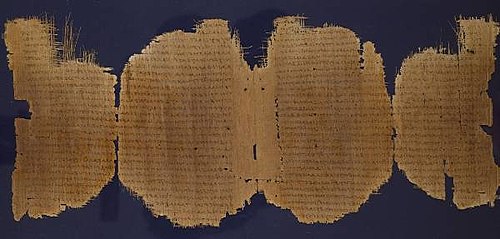
In 2012, Daniel Wallace a world-renowned paleographer from Dallas Theological Seminary announced that seven New Testament papyri were discovered, one containing portions of the Gospel of Mark [REF-CTM01]. This new fragment could predate P45 by 100 to 150 years, almost certainly placing it in the first century and making it the oldest of its kind. This fragment is still under investigation. [REF-DBW02]
The evidence presented regarding the eyewitness testimony of Peter as recorded by Mark attests to the trustworthiness of the record concerning Jesus' life and ministry.
Resources:
Summary:
The Gospel of Luke is a record of Jesus' life and ministry as seen through the eyes of the early disciples. It is inscribed by Luke the close companion of Paul.
Based on biblical scholarship, the Gospel of Luke is credited to Luke the disciple. Its authorship is based on the following inferences and references:
Luke drew from many sources, most notably the synoptic Gospel of Mark and Jesus' original twelve disciples.
Many people have set out to write accounts about the events that have been fulfilled among us. They used the eyewitness reports circulating among us from the early disciples. Having carefully investigated everything from the beginning, I also have decided to write an accurate account for you, most honorable Theophilus, so you can be certain of the truth of everything you were taught. (Luke 1:1-4 NLT)
In this passage we learn that many disciples were attempting to write accounts of the events of Jesus' ministry. These accounts were eyewitness by Jesus' original disciples. They included both oral and written accounts. Luke makes a special point to say that he thoroughly investigated all accounts to ensure they were accurate, trustworthy and authoritative. Therefore, Luke's account of Jesus' life and ministry is trustworthy.
If the Book of Acts was written in 62 AD (before the fall of Jerusalem in 70 AD), then the Gospel of Luke must have been written beforehand. Scholars believe the Gospel of Luke to be written in 59-62 AD. This is roughly 26-29 years after Jesus' ascension.
According to Geisler and Turek [REF-GEI01], Luke's Book of Acts is historically, geographically and archaeologically accurate. Based on Colin Hemer's research [REF-HEM01], they cite 84 passages that have been painstakingly attested by historical, geographical and archaeological discoveries. The assumption is that if the Book of Acts is highly accurate, so is the Gospel of Luke.
The evidence presented regarding the eyewitness testimony of the early disciples as recorded by Luke attests to the trustworthiness of the record concerning Jesus' life and ministry.
Resources:
Summary:
The Gospel of John is a record of Jesus' life and ministry as seen through the eyes of John the "beloved disciple".
John does not refer to himself by name in the gospel. Rather, he refers to himself as "the disciple whom Jesus loved" (John 13:23, John 19:26, John 20:2, John 21:7-24). According to John 21, this beloved disciple was the author of the gospel.
Peter turned around and saw behind them the disciple Jesus loved—the one who had leaned over to Jesus during supper. ... This disciple is the one who testifies to these events and has recorded them here. And we know that his account of these things is accurate. (John 21:20-24 NLT)
The title "the one whom Jesus loved" was attributed to John by the early church father, Clement of Alexandra (150-215 AD). Clement's reference is cited by Eusebius in his Ecclesiastical History 3.23.1.
John was one of the three disciple that comprised Jesus' inner circle along with Peter and James the brother of John (Mark 13:3, Mark 14:33, Luke 8:51, Luke 9:28, Luke 22:8). He was present at the foot of the cross when Jesus was crucified, at the transfiguration and many other special occasions. There are many other intimate encounters John had with Jesus. These are recorded in the Gospel of John and the other gospels. Hence, referring to himself as the beloved disciple is an accurate description of the intimate relationship he had with Jesus.
The Gospel of John is largely theological in content and style. Throughout the gospel, the author emphasizes Jesus' divinity and the fulfillment of Old Testament messianic prophecies. Its teachings on how Jesus was foreshadowed in the many Jewish festivals are carefully developed and organized. As a Jew, John would have been well acquainted with Jewish culture, and religious teachings and festivals.
Early 2nd century writers Irenaeus (Against Heresies Book III 180 AD) [REF-IRE01] and Tertullian (Against Heresies 5.1 155-240 AD) also credit the Gospel of John to John the beloved disciple. Finally, the Muratorian Fragment from the 8th century refers to John as the author of the fourth Gospel, "The forth of the Gospels, that of John, (one) of the disciples" [REF-MUR01].
Most scholars believe that John completed writing his Gospel by 85-90 AD." This view is established on the basis of Clement's statement that John's gospel was a supplement to the other three gospels. This is cited by Eusebius in his Ecclesiastical History 6.14.7 [REF-CEL10] and 6.25.3-6 [REF-CEL11]. This implies that John's gospel must be dated later than the estimated writing of the other gospels.
Still other biblical scholars date the Gospel of John as early as 50-70 AD. They claim that John's gospel was independent of the other synoptic gospels and therefore could have been written at any time.
According to Geisler and Turek [REF-GEI01], the Gospel of John is historically, geographically and archaeologically accurate. Based on Carl Blomberg's research [REF-BLO01], they cite 59 passages that have been painstakingly attested by historical, geographical and archaeological discoveries. John's Gospel is historically and geographically accurate.
The accuracy of the Gospel of John is also corroborated by multiple papyri dating back as early as late first century.

Papyrus P52 from the Rylands Library contains text from John 18.31-33, 37-38. This fragment is dated by paleographers between 96-125 AD. If the gospel was written in 85-90 AD, then P52 was written within 11-35 years of the autograph.
The evidence presented regarding the eyewitness testimony of John attests to the trustworthiness of the record concerning Jesus' life and ministry.
Resources:
Summary:
Jesus did not appear to one person in a vision. Rather, he appeared to thousands of people publicly. Therefore, his claims and the events of his life were well attested by many eyewitnesses.
Eyewitness testimonies provide strong evidence. The New Testament is replete with eyewitness evidence from a diverse set of authoritative sources. These sources include Jesus' original twelve disciples and others that encountered Jesus. These eyewitnesses testify to the divinity of Jesus.
These eyewitnesses are summarized in the table below.
| Witness | Testimony | Reference |
|---|---|---|
| Zechariah | Prophesying that Jesus was the Long-Awaited Messiah | Luke 1:67-79 |
| Simeon | Witnessing Jesus was the Long-Awaited Messiah | Luke 2:22-35 |
| Anna | Witnessing Jesus was the Long-Awaited Messiah | Luke 2:36-38 |
| Magi | Star of Jesus Birth Worshipped the King of Jews |
Matthew 2:1-12 |
| John the Baptist | Acknowledging Jesus is the Christ, the Son of God | John 1:29-34 |
| People of Sychar | Believed in Jesus as Savior of the World | John 4:39-42 |
| Matthew | Acknowledging Jesus is the Christ, the Son of God | Matthew 1:1 |
| Mark | Acknowledging Jesus is the Christ, the Son of God | Mark 1:1 |
| John | Acknowledging Jesus is the Expression (Logos) of God | John 1:1-18 John 20:31 1 John 5:13 |
| Peter | Confessing Jesus is the Christ, the Son of the Living God | Matthew 16:16-20 Mark 8:27-30 Luke 9:18-21 |
| Paul | Confessing Jesus is Indeed the Son of God | Acts 9:20 |
| Nathanael | Confessing Jesus is the Son of the God | John 1:49 |
| Disciples | Worshipping Jesus as Son of God | Matthew 14:33 |
| Thief of the Cross | Acknowledgement that Jesus Had a Non-Early Kingdom | Luke 23:42 |
| Centurion | Admitting Jesus is Truly the Son of God | Matthew 27:54 Mark 15:39 Luke 23:47 |
| Blind Man | Admitting Jesus was from God | John 9:30-33 |
| Angel Gabriel | Jesus to be called holy—the Son of God | Luke 1:5-35 |
| Other Angels | Jesus the Messiah is Born | Matthew 1:20-23 Luke 2:8-14 |
| God | Acknowledgement that Jesus is the Beloved Son of God | Matthew 3:17 Mark 1:11 Luke 3:22 Matthew 17:1-8 Mark 9:7 Luke 9:35 |
| Satan | Recognizing Jesus as Son of God | Matthew 4:3-6 |
| Demons | Acknowledging Jesus as Son of God | Matthew 8:29 Mark 3:11 Mark 5:7 Luke 4:41 Luke 8:28 |
Table: Eyewitnesses to Jesus' Divinity
This table represents more than 30 witnesses that claim Jesus is the Son of God. The amount of evidence is overwhelming.
Summary:
Witnesses are crucial to Jesus' claims. Based on Old Testament Law (Deuteronomy 17:6), two-to-three witnesses were required to put a person to death.
Jesus acknowledged that his own testimony was inadmissible based on Old Testament Law (John 5:31-32). So, he substantiated his claims by identifying five other witnesses. Based on Old Testament Law, these five witnesses would have sufficiently authenticated Jesus' claims (John 5:31-47).
The first witness is John the Baptist. John fulfilled Old Testament prophecies as being Jesus' messenger or forerunner (Malachi 3:1, Isaiah 40:3). Old Testament prophecies are noted in the Gospel of Mark.
As it is written in Isaiah the prophet,
"Behold, I send my messenger before your face,
who will prepare your way,
the voice of one crying in the wilderness:
‘Prepare the way of the Lord,
make his paths straight,’"
...
And he preached, saying, "After me comes he who is mightier than I, the strap of whose sandals I am not worthy to stoop down and untie.
I have baptized you with water, but he will baptize you with the Holy Spirit."
(Mark 1:2-8)
John the Baptist himself testifies that Jesus is the Son of God.
And John bore witness: "I saw the Spirit descend from heaven like a dove, and it remained on him. I myself did not know him, but he who sent me to baptize with water said to me, ‘He on whom you see the Spirit descend and remain, this is he who baptizes with the Holy Spirit.’ And I have seen and have borne witness that this is the Son of God." (John 1:32-34, John 5:33-35)
The second witness is God the Father. During Jesus' baptism the voice of God is heard (Matthew 3). The audible voice of God the Father attests that Jesus is his Son.
And when Jesus was baptized, immediately he went up from the water, and behold, the heavens were opened to him, and he saw the Spirit of God descending like a dove and coming to rest on him; and behold, a voice from heaven said, "This is my beloved Son, with whom I am well pleased." (Matthew 3:16-17)
The third witness is the Holy Spirit. The Holy Spirit testifies about the sonship of Jesus during his baptism (Matthew 3:16-17). The Holy Spirit descended on Jesus and remained with him. In effect, the Holy Spirit anoints and authorizes Jesus' ministry. This was a public display for those in attendance to witness, not just for John the Baptist's benefit.
The apostle John reiterates this truth in 1 John 5.
And Jesus Christ was revealed as God’s Son by his baptism in water and by shedding his blood on the cross—not by water only, but by water and blood. And the Spirit, who is truth, confirms it with his testimony. So we have these three witnesses— the Spirit, the water, and the blood—and all three agree. Since we believe human testimony, surely we can believe the greater testimony that comes from God. And God has testified about his Son. (1 John 5:6-9 NLT)
In this passage we learn that water represents the waters of baptism (forgiveness) and that blood represents the blood that Christ shed at his crucifixion (redemption) (Mark 15:37-39). The facts the Jesus was baptized and crucified are additional proofs that Jesus is the Son of God. This fulfilled the Old Testament prophecies regarding the Messiah (Isaiah 53:5-12).
The fourth witness is the Old Testament scriptures. Jesus declares that Old Testament prophecies bear witness that Jesus is the Son of God.
You search the Scriptures because you think that in them you have eternal life; and it is they that bear witness about me. (John 5:39)
In Jesus' last days on earth, he explained to the disciples Old Testament prophecies concerning himself.
And he said to them, "O foolish ones, and slow of heart to believe all that the prophets have spoken! Was it not necessary that the Christ should suffer these things and enter into his glory?" And beginning with Moses and all the Prophets, he interpreted to them in all the Scriptures the things concerning himself. (Luke 24:25-27)
The fifth and final witness is Jesus authoritative teaching and miracles. Jesus proclaims that his miracles bear witness that Jesus is the Son of God (John 5).
But the testimony that I have is greater than that of John. For the works that the Father has given me to accomplish, the very works that I am doing, bear witness about me that the Father has sent me. (John 5:36)
The disciples in the Book of Acts proclaimed the very same testimony. Those who heard them were not relying on secondhand reports; many had personally witnessed the miracles Jesus performed.
"People of Israel, listen! God publicly endorsed Jesus the Nazarene by doing powerful miracles, wonders, and signs through him, as you well know." (Acts 2:22)
One of the Pharisees named Nicodemus came to the same conclusion. He acknowledged that the other Pharisees conferred and determined that Jesus was attended by God's power.
Now there was a man of the Pharisees named Nicodemus, a ruler of the Jews. This man came to Jesus by night and said to him, "Rabbi, we know that you are a teacher come from God, for no one can do these signs that you do unless God is with him." (John 3:1-2)
Summary:
Creeds in the New Testament provide a synopsis of what the early church believed. Creeds were common, shared statements or declarations of faith held by the New Testament church. These statements serve as the fundamental teachings regarding God the Father, Jesus the Son and the Holy Spirit to the first century church. Creedal statements regarding Jesus form a Christology about the person, nature and work of Jesus Christ, the Messiah.
The earliest creeds originated in the Book of Acts (ca. 33 AD) with the preaching of Peter and Paul. Later these apostolic creeds were written down in the New Testament epistles. They were further developed by the early church fathers in the second and third centuries. According to New Testament scholars Martin Hengel [REF-HGL01], C. F. D. Moule [REF-MOU01] and others, the fully formed Christology emerged 20 years after the resurrection.
Creeds are easily recognized within biblical texts because they use a different literary style than other passages. Most creeds exhibit poetic features such as stanzas much like ancient hymns. Below, the cited creeds are formatted to illustrate individual stanzas. Bold font is used to illustrate Christological statements concerning the divinity of Jesus.
Peter's Sermon at Pentecost Acts 2:22-36 ▼
"Men of Israel, hear these words: Jesus of Nazareth, a man attested to you by God with mighty works and wonders and signs that God did through him in your midst, as you yourselves know— this Jesus, delivered up according to the definite plan and foreknowledge of God, you crucified and killed by the hands of lawless men.
God raised him up, loosing the pangs of death, because it was not possible for him to be held by it.
...
Brothers, I may say to you with confidence about the patriarch David that he both died and was buried, and his tomb is with us to this day.
Being therefore a prophet, and knowing that God had sworn with an oath to him that he would set one of his descendants on his throne,
he foresaw and spoke about the resurrection of the Christ, that he was not abandoned to Hades, nor did his flesh see corruption.
This Jesus God raised up, and of that we all are witnesses.
Being therefore exalted at the right hand of God, and having received from the Father the promise of the Holy Spirit, he has poured out this that you yourselves are seeing and hearing.
...
Let all the house of Israel therefore know for certain that God has made him both Lord and Christ, this Jesus whom you crucified."
Peter Speaks in Solomon's Portico Acts 3:12-26 ▼
"Men of Israel, why do you wonder at this, or why do you stare at us, as though by our own power or piety we have made him walk?
The God of Abraham, the God of Isaac, and the God of Jacob, the God of our fathers, glorified his servant Jesus, whom you delivered over and denied in the presence of Pilate, when he had decided to release him.
But you denied the Holy and Righteous One, and asked for a murderer to be granted to you,
and you killed the Author of life, whom God raised from the dead. To this we are witnesses.
And his name—by faith in his name—has made this man strong whom you see and know, and the faith that is through
Jesus has given the man this perfect health in the presence of you all.
"And now, brothers, I know that you acted in ignorance, as did also your rulers.
But what God foretold by the mouth of all the prophets, that his Christ would suffer, he thus fulfilled.
Repent therefore, and turn back, that your sins may be blotted out,
that times of refreshing may come from the presence of the Lord, and that he may send the Christ appointed for you, Jesus,
whom heaven must receive until the time for restoring all the things about which God spoke by the mouth of his holy prophets long ago.
Moses said, ‘The Lord God will raise up for you a prophet like me from your brothers. You shall listen to him in whatever he tells you.
And it shall be that every soul who does not listen to that prophet shall be destroyed from the people.’
And all the prophets who have spoken, from Samuel and those who came after him, also proclaimed these days.
You are the sons of the prophets and of the covenant that God made with your fathers, saying to Abraham,
‘And in your offspring shall all the families of the earth be blessed.’
God, having raised up his servant, sent him to you first, to bless you by turning every one of you from your wickedness."
Peter's Confession (Based on an Early Christian Hymn) 1 Peter 2:22-25 NLT ▼
He never sinned,
nor ever deceived anyone.
He did not retaliate when he was insulted,
nor threaten revenge when he suffered.
He left his case in the hands of God,
who always judges fairly.
He personally carried our sins
in his body on the cross
so that we can be dead to sin
and live for what is right.
By his wounds
you are healed.
Once you were like sheep
who wandered away.
But now you have turned to your Shepherd,
the Guardian of your souls.
Without question, this is the great mystery of our faith:
Christ was revealed in a human body
and vindicated by the Spirit.
He was seen by angels
and announced to the nations.
He was believed in throughout the world
and taken to heaven in glory.
Concerning his Son, who was descended from David according to the flesh and was declared to be the Son of God in power according to the Spirit of holiness by his resurrection from the dead, Jesus Christ our Lord.
For I delivered to you as of first importance what I also received:
that Christ died for our sins in accordance with the Scriptures,
that he was buried,
that he was raised on the third day in accordance with the Scriptures, and that
he appeared to Cephas, then to the twelve.
Then he appeared to more than five hundred brothers at one time,
most of whom are still alive, though some have fallen asleep.
Then he appeared to James, then to all the apostles.
Last of all, as to one untimely born, he appeared also to me.
In your relationships with one another, have the same mindset as Christ Jesus:
Who, being in very nature God,
did not consider equality with God something to be
used to his own advantage;
rather, he made himself nothing
by taking the very nature of a servant,
being made in human likeness.
And being found in appearance as a man,
he humbled himself
by becoming obedient to death—
even death on a cross!
Therefore God exalted him to the highest place
and gave him the name that is above every name,
that at the name of Jesus every knee should bow,
in heaven and on earth and under the earth,
and every tongue acknowledge that Jesus Christ is Lord,
to the glory of God the Father.
(Also Romans 1:3-4, Romans 10:9, 2 Timothy 2:8)
Irenaeus’ "Rule of Faith" (Late 2nd Century) ▼
"…this faith: in one God, the Father Almighty, who made the heaven and the earth and the seas and all the things that are in them; And in one Christ Jesus, the Son of God, who was made flesh for our salvation; And in the Holy Spirit, who made known through the prophets the plan of salvation, and the coming, and the birth from a virgin, and the passion, and the resurrection from the dead, and the bodily ascension into heaven of the beloved Christ Jesus, our Lord, and his future appearing from heaven in the glory of the Father to sum up all things and to raise anew all flesh of the whole human race…"
Hippolytus' the "Interrogatory" Creed (ca. 215 AD) ▼
"Do you believe in God the Father All Governing? Do you believe in Christ Jesus, the Son of God, Who was begotten by the Holy Spirit from the Virgin Mary, Who was crucified under Pontius Pilate, and died (and was buried) and rose the third day living from the dead, and ascended into the heavens, and sat down on the right hand of the Father, and will come to judge the living and the dead? Do you believe in the Holy Spirit, in the holy Church and in the resurrection of the body?"
The Apostles' Creed (ca. 390 AD) ▼
I believe in God, the Father Almighty,
the Maker of heaven and earth.
I believe in Jesus Christ, His only Son, our Lord:
Who was conceived by the Holy Ghost,
born of the virgin Mary,
suffered under Pontius Pilate,
was crucified, dead, and buried;
He descended into hell. (Torment/Suffering)
The third day He arose again from the dead;
He ascended into heaven,
and sitteth on the right hand of God the Father Almighty;
from thence he shall come to judge the quick and the dead.
I believe in the Holy Ghost;
the holy catholic church; (Universal Church)
the communion of saints;
the forgiveness of sins;
the resurrection of the body;
and the life everlasting.
Amen.
The Christological statements established by the first century church include:
These oral and written creeds of the New Testament church serve as foundational statements of what the early church believed and confessed regarding the divinity of Jesus. They are based on eyewitness accounts of the apostles and many of Jesus' contemporaries. They validate Jesus' claims of being the Son of God, the Messiah.
Resources:
Summary:
Additional evidence regarding eyewitness facts is provided herein. This evidence supports the claims of Jesus' divinity.
Then he (Jesus) said to them, "These are my words that I spoke to you while I was still with you, that everything written about me in the Law of Moses and the Prophets and the Psalms must be fulfilled." Then he opened their minds to understand the Scriptures, and said to them, "Thus it is written, that the Christ should suffer and on the third day rise from the dead, and that repentance for the forgiveness of sins should be proclaimed in his name to all nations, beginning from Jerusalem. You are witnesses of these things. "
This clear understanding of the Gospel message is evidenced by their boldness in preaching to the pluralistic Roman empire, and their courage in standing up to the Jewish ruling council (Acts 3:11-26 , Acts 4:1-22).Resources:
Eyewitness testimony is crucial in any court trial. Eyewitnesses provide direct evidence that supports the truth of an assertion. This means that no additional evidence or inference is needed. Eyewitnesses testify to the time, place and nature of the events. The facts obtained from direct evidence far exceed the information inferred from circumstantial or hypothetical evidence.
The New Testament is replete with eyewitness accounts of people claiming Jesus was divine. These accounts draw upon a diverse range of people that have had a shared experience with Jesus.
Jesus' original twelve disciples had first-hand knowledge of Jesus' life and ministry. They lived with Jesus for three years. They eye witnessed Jesus' teaching, miracles and the fulfillment of Old Testament prophecies. Because of their longstanding, intimate relationship with Jesus, their testimony is the most significant.
In Peter's second letter to the Christians in Galatia, Peter states that he and the other disciples did not commit their lives to a myth, but to a reality. He states that he and the others were eyewitnesses to Jesus messiahship.
For we did not follow cleverly devised myths when we made known to you the power and coming of our Lord Jesus Christ, but we were eyewitnesses of his majesty (2 Peter 1:16).
In Acts 2:32, Acts 3:15, Acts 4:20, Acts 5:30-32 and Acts 10:39-40, Peter claims that he and others were eyewitnesses.
In the Gospel of Matthew, Peter was the first to confess that Jesus was the Christ (Messiah). Jesus in turn affirms Peter's confession and instructs the disciples to not reveal his true identity until "his hour of sacrifice has come" (John 17:1).
He said to them, "But who do you say that I am?" Simon Peter replied, "You are the Christ, the Son of the living God. ... Then he strictly charged the disciples to tell no one that he was the Christ." (Matthew 16:15-20, also Luke 9:18-21)
In the Gospel of John, John claims that he himself bore witness of the events concerning Jesus. He also states that he and the other disciples experienced the truth of the testimony of Jesus as being the Messiah.
This is the disciple who is bearing witness about these things, and who has written these things, and we know that his testimony is true. (John 21:20-24)
The written testimony of the Gospel and Epistle eyewitnesses would easily stand up in a court of law. Not only do we have one witness, but we have several witnesses. Further, the events witnessed by the Gospel and Epistle writers were voluminous covering a time span of three years, not just a single event.
The preponderance of eyewitness evidence presented in the New Testament leads us to the conclusion that Jesus was the Son of God.
Resources:
Summary:
This claim is supported by the following evidence.
Summary:
Based on the Gospel accounts, we learn a great deal about the identity of Jesus. His disciples and the crowds had opinions of who Jesus was. Many regarded him as a prophet while others regarded him as a demon or lunatic. His disciples regarded him early in his ministry as someone sent by God. Confusion over his identity was widespread. The question is "Who did JESUS say he was?"
Based on Jesus statements found in the gospels, we see that Jesus claimed that God was "His Father" and that he was "one with the Father". In some cases, Jesus claimed to be the I AM, God himself.
The evidence presented herein identifies the Christological titles and roles Jesus claims for himself.
Jesus refers to God as "My Father" approximately 50 times in the gospel accounts. This personal reference to God speaks to the intimate relationship Jesus has with God the Father. This manner of reference was an affront to the Jewish leaders who regarded the name of God as sacred. Jews referred to God using alternate names such as Yahweh (YHWH) to avoid sacrilege.
Jesus prayed to God as "Abba Father" in Mark 14:36. This is an Aramaic term of endearment used by children to address their father. It is equivalent to the word "daddy". It is one of the most intimate words that can be used to refer to a father. This intimate term would never have been used by any God-fearing Jew to refer to God.
Prior to Jesus ascension in John 20:17, Jesus says he is "ascending to my Father and your Father, to my God and your God."
In this verse he refers to his distinct, divine Sonship with the Father.
Perhaps Jesus' boldest statements of his unique relationship with God the Father is found in Matthew 11:27 and John 14:8-10. Jesus declared to the crowds and to his disciples,
"My Father has entrusted everything to me. No one truly knows the Son except the Father, and no one truly knows the Father except the Son and those to whom the Son chooses to reveal him." (Matthew 11:27)
Philip said to him, "Lord, show us the Father, and it is enough for us." Jesus said to him, "Have I been with you so long, and you still do not know me, Philip? Whoever has seen me has seen the Father. How can you say, ‘Show us the Father’? Do you not believe that I am in the Father and the Father is in me? John 14:8-10
Jesus makes it noticeably clear in these passages that he is the only one that can reveal the Father to mankind. Unequivocally, Jesus is claiming to be the absolute revelation or full expression of God [REF-WLC03].
Ultimately, Jesus' claims of God being his Father infuriated the Jews. Their objection was that Jesus was implying he was equal to God as recorded in John 5:18.
This was why the Jews were seeking all the more to kill him, because not only was he breaking the Sabbath, but he was even calling God his own Father, making himself equal with God.
(Also see John 10:31-33)
Perhaps the most frequent title Jesus claimed for himself is "the Son of Man". He used this title approximately 85 times in the gospels.
The phrase "Son of Man" in Daniel 7:13-14 refers to a divine figure who will come at the end of the age and establish his eternal kingdom. This divine figure is in the likeness of man having physical form. His divinity is demonstrated as one coming on the "clouds of heaven" and his heavenly origin (Psalm 68:4, Psalm 97:2). This Old Testament passage has been interpreted as a prophecy referring to the second coming of Jesus at the end of the age (Revelation 1:7, Revelation 14:14). According to Acts 1:11, the human-divine nature of Jesus is the same as his nature at his second coming on the clouds (Revelation 1:7). So, Jesus qualifies as the Son of Man in terms of his human-divine nature.
The primary distinction between the use of the title "Son of Man" in the Old and New Testaments, is that in the New Testament Jesus claims to be the Son of Man, not merely a son of man as recorded in Daniel 7:13 and the Book of Ezekiel [REF-MOU01].
Note that Jesus never claimed the title "Son of God", the "Christ" or the "Messiah". However, others claimed he was the Son of God, the Christ and the Messiah. This includes God the Father (Mark 1:11, Mark 9:7), the demons (Mark 1:24), the disciples (Mark 8:29) and others. In some cases, Jesus affirmed peoples' use of these titles (John 4:26).
In Exodus 3:14, God identified himself as the I AM WHO I AM. This is the first person singular present tense of the verb to be. Essentially, God is stating that he is - a statement of being.
This is the holy name God used for himself when speaking to Moses on Mount Sinai. This name speaks of God as an eternal, self-sufficient, self-existent, all-encompassing being without limitations, a being who is not dependent on something else for his existence. This name was so sacred that it was used exclusively by God himself and not a name that would be commonly used by the Jews. Jesus identifies himself as the I AM in the following passages:
Samaritan Woman at the Well (John 4:25-26 NLT) ▼
The woman said, "I know the Messiah is coming—the one who is called Christ. When he comes, he will explain everything to us." Then Jesus told her, "I AM the Messiah!"
Jesus Walks on the Water (John 6:16-21 NLT) ▼
When they (the disciples) had rowed about three or four miles, they saw Jesus walking on the sea and coming near the boat, and they were frightened. But he (Jesus) said to them, "Don’t be afraid. I AM here!"
Jesus in the Garden of Gethsemane (John 18:4-6 NLT) ▼
Who are you looking for?" Jesus asked. "Jesus the Nazarene," the Roman soldiers and temple guards replied. "I AM he," Jesus said. (Judas, who betrayed him, was standing with them.) As Jesus said "I AM he ," they all drew back and fell to the ground!
Unbelieving People (John 8:21-59 NLT) ▼
Jesus said, "For unless you believe that I AM who I claim to be, you will die in your sins."
"Who are you?" they demanded.
Jesus replied, "The one I have always claimed to be.
I have much to say about you and much to condemn, but I won’t. For I say only what I have heard from the one who sent me, and he is completely truthful."
But they still didn’t understand that he was talking about his Father.
So Jesus said, "When you have lifted up the Son of Man on the cross, then you will understand that I AM he.
...
Jesus said, "If I want glory for myself, it doesn’t count. But it is my Father who will glorify me. You say, ‘He is our God,’
but you don’t even know him. I know him. If I said otherwise, I would be as great a liar as you! But I do know him and obey him.
Your father Abraham rejoiced as he looked forward to my coming. He saw it and was glad."
The people said, "You aren’t even fifty years old. How can you say you have seen Abraham?"
Jesus answered, "I tell you the truth, before Abraham was even born, I AM!"
At that point they picked up stones to throw at him.
Jesus' Trial (Mark 14:61-62 NLT) ▼
The high priest asked him, "Are you the Messiah, the Son of the Blessed One?" Jesus said, "I AM. And you will see the Son of Man seated in the place of power at God’s right hand and coming on the clouds of heaven."
In addition to the I AM claims listed above, Jesus claimed the following Messianic titles. These metaphorical titles identify Jesus as the fulfillment of an attribute of God revealed in the Old Testament.
| I AM Claim | Reference | Fulfillment |
|---|---|---|
| I am the bread of life | John 6:35 | Exodus 16:35 John 6:31 |
| I am the light of the world | John 8:12 | Isaiah 42:6 |
| I am the door of the sheep ... he will find pasture | John 10:7-9 | Psalm 23:2 Ezekiel 34:14 |
| I am the good shepherd | John 10:11 | Isaiah 40:11 Ezekiel 34:12 |
| I am the resurrection and the life | John 11:25 | John 6:40 |
| I am the way, and the truth, and the life | John 14:6 | Ephesians 2:18 |
| I am the true vine | John 15:1 | Jeremiah 2:21 |
In these statements, Jesus clearly identifies himself as the fulfillment of these Messianic titles. He is emphatically saying "I am God". Consequently, the Jewish leaders condemned Jesus for blasphemy (Matthew 26:65-66).
In addition to Jesus' claims of being the I AM (Ego Eimi), he claims to have exclusive unity with God the Father. He is One with the Father in terms of his purpose and nature.
At that time the Feast of Dedication took place at Jerusalem. It was winter, and Jesus was walking in the temple, in the colonnade of Solomon. So the Jews gathered around him and said to him, "How long will you keep us in suspense? If you are the Christ, tell us plainly." Jesus answered them, "I told you, and you do not believe. The works that I do in my Father's name bear witness about me, but you do not believe because you are not among my sheep. My sheep hear my voice, and I know them, and they follow me. I give them eternal life, and they will never perish, and no one will snatch them out of my hand. My Father, who has given them to me, is greater than all, and no one is able to snatch them out of the Father's hand. I and the Father are one." (John 10:22-30)
Essentially, Jesus is saying, "The Father and I are one-in-the-same. We are the same being."
Jesus speaks of this unity with God the Father in numerous passages, most notably John 8:38, John 10:15, John 10:38 and John 14:9-11.
Jesus acted and spoke with the divine authority of God throughout his ministry. His teachings were so astonishing that the crowds recognized his authority as being greater than the scribes (Matthew 7:28-29).
Jesus' Teaching Authority Superseded the Old Testament Law:
Jesus frequently interpreted and clarified the Old Testament Law by saying "You have heard the law that says ..., but I say ..." (Matthew 5:31-32).
In so doing, he put himself in the position of Moses who presented the Law to the people, and of God who is the Law giver.
Given Jesus' lack of rabbinic training, the Jewish leaders repeatedly questioned his authority over the Law.
Jesus' Claimed to be the Origin of Divine Truth:
Jesus frequently used the word AMEN when speaking (Matthew 18:3).
If the word AMEN is used after a statement, it is interpreted to mean "so be it", or total agreement and endorsement.
However, if the word AMEN is used before a statement, the speaker implies that the statement is absolutely true,
and that the speaker has firsthand knowledge and is the origin of the truth.
It is as if the speaker is saying, "I know this is true firsthand because I am the author of this truth!".
This again places Jesus in the position of God, the authority of divine truth.
Jesus' Claimed to have Divine Authority to Forgive Sins:
Jesus claimed to have the authority to forgive sin (John 5:1-15, John 8:3-11).
Since God is ultimately the one sinned against and has the prerogative to forgive sin, Jesus is claiming to speak for God with divine authority.
Seeing their faith, Jesus said to the man, "Young man, your sins are forgiven." But the Pharisees and teachers of religious law said to themselves, "Who does he think he is? That’s blasphemy! Only God can forgive sins!". (Luke 5:20-24 NLT, also see Luke 7:49, Matthew 9:1-6).
Jesus knew his authority to forgive sins would be challenged by the Jewish leaders. He proved his authority by healing the paralyzed man (Matthew 9:5-6).
During Jesus' ministry, he performed thousands of miracles [HIS-EV47]. According to the Gospel of Matthew, knowledge of his miracles spread throughout the entire region of Galilee. Countless people brought those who were sick, and demon possessed to Jesus.
And he went throughout all Galilee, teaching in their synagogues and proclaiming the gospel of the kingdom and healing every disease and every affliction among the people. So his fame spread throughout all Syria, and they brought him all the sick, those afflicted with various diseases and pains, those oppressed by demons, those having seizures, and paralytics, and he healed them. (Matthew 4:23-24)
Jesus demonstrated confidence in his authority to perform miracles in the Gospel of Matthew. When John the Baptist was in prison, he sent his disciples to ask Jesus if he was the Messiah. Jesus provided the following answer.
John the Baptist, who was in prison, heard about all the things the Messiah was doing. So he sent his disciples to ask Jesus,
"Are you the Messiah we’ve been expecting, or should we keep looking for someone else?"
Jesus told them, "Go back to John and tell him what you have heard and seen—
the blind see, the lame walk, those with leprosy are cured, the deaf hear, the dead are raised to life, and the Good News is being preached to the poor."
(Matthew 11:2-5)
Working miracles was an integral part of Jesus' ministry. He exercised his power to heal and cast out demons everywhere he went and with everyone he encountered.
Jesus claims that people will be judged based on whether they acknowledge him as the Messiah. Their salvation depends on their confession of Jesus as the Christ, the Messiah.
"And I tell you, everyone who acknowledges me before men, the Son of Man also will acknowledge before the angels of God, but the one who denies me before men will be denied before the angels of God. And everyone who speaks a word against the Son of Man will be forgiven, but the one who blasphemes against the Holy Spirit will not be forgiven." (Luke 12:8-10)
"So everyone who acknowledges me before men, I also will acknowledge before my Father who is in heaven, but whoever denies me before men, I also will deny before my Father who is in heaven." Matthew 10:32-33, also see Matthew 19:28).
In addition to these direct teachings, Jesus also refers to himself as the "way" (John 14:6) and the "door" (John 10:7-9).
It is clear from the evidence that Jesus claimed to be divine, the very essence of God himself. This evidence was so overwhelming and condemning that the Jewish ruling council had sufficient grounds upon which to condemn Jesus to death for the crime of blasphemy (John 10:24-33, Matthew 26:63-66).
Resources:
Summary:
The attributes of God are well outside the realm of human understanding. Human beings are finite and therefore cannot adequately grasp the infinitude and majesty of God. Fortunately, God revealed himself through nature and the Biblical writers. Using various figures of speech such as similes and anthropomorphic language, we get a human-understandable glimpse of the character of God.
Based on the gospel accounts, Jesus claimed throughout his ministry to be the incarnation of God [HIS-EV29]. These claims place Jesus in a position of equality and oneness with God. Given that Jesus was fully human, how can he possess the divine attributes of God? What is it about Jesus' life that truly exhibits the divine character of God?
The evidence presented herein identify the characteristics of Jesus' life that match the revealed attributes of God in the Old Testament.
The attribute of omniscience means that God is all-knowing. God has infinite and complete knowledge of both himself and his creation. According to Psalm 147:5 NLT, "His understanding is beyond comprehension!". Essentially, his knowledge is infinite and beyond human understanding. In Hebrews 4:13 NIV, we learn that "nothing in all creation is hidden from God’s sight". God is fully aware of every planetary object as well as every atom. Nothing escapes his notice.
His understanding also includes human intentions - the human mind and heart. According to 1 John 3:20, God knows what we will say before we speak, and knows our very thoughts and intentions (Psalm 139:4, 1 Kings 8:39, Luke 8:16-17). Essentially, nothing we think or do surprises God.
Jesus, like God himself, possessed the attribute of omniscience. Throughout his ministry he demonstrated the ability to know the thoughts and intimate details of people. The following passages illustrate this attribute of omniscience in Jesus.
"Now we know that you know all things and do not need anyone to question you; this is why we believe that you came from God."
(John 16:30)
Jesus knew what they were thinking, so he ...
(Matthew 9:4)
Knowing their thoughts, he said to them ...
(Matthew 12:25)
Jesus saw Nathanael coming toward him and said of him, "Behold, an Israelite indeed, in whom there is no deceit!"
Nathanael said to him, "How do you know me?" Jesus answered him, "Before Philip called you, when you were under the fig tree, I saw you."
(John 1:47-48).
Jesus knowledge also extends beyond the truth of scripture. His use of the word AMEN preceding many of his teachings implies that he has firsthand knowledge and is the source of truth [HIS-EV29]. His exhaustive knowledge of the nature of God and divine truth is not merely something he learned in school or is a product of higher intelligence. Rather, Jesus is blatantly claiming to be the author of divine truth. This is evidenced by the testimony of Jesus' listeners.
And when Jesus finished these sayings, the crowds were astonished at his teaching, for he was teaching them as one who had authority, and not as their scribes. Matthew 7:28-29
Jesus' authoritative teaching is evidence that his truth was not derived from the teaching of the Jewish scribes or the Torah.
Finally, Jesus omniscience was manifest in his ability to predict future events. During the course of his ministry, Jesus predicted the destruction of the temple in Jerusalem (Luke 21:5-6), his death and resurrection (Matthew 16:21, Mark 9:31, Mark 10:32-34, Mark 10:32-34, John 12:23-24), Peter's betrayal (Luke 22:54-6) and many other events that were fulfilled.
The attribute of omnipresence means that God is everywhere at the same time. God is not constrained by his creation, i.e. not constrained by space and time.
Jesus, like God himself, possessed the attribute of omnipresence. The following passages illustrate this attribute of omnipresence:
Jesus refers to a shared glory that he had with God the Father before creation.
"Now, Father, bring me into the glory we shared before the world began."
(John 17:5, also (John 1:1)
This passage speaks of Jesus' existence before the universe was created. He was present with the Father from eternity past.
On another occasion Jesus told the Jewish leaders that he was alive before the patriarch Abraham (John 8:48-59). In this passage Jesus claims to be the eternal God, the I AM.
When Jesus appeared to his disciples after his resurrection, he assured them that they would never be alone. Jesus promised to be with them always, for all time.
And Jesus came and said to them, "All authority in heaven and on earth has been given to me. Go therefore and make disciples of all nations, baptizing them in the name of the Father and of the Son and of the Holy Spirit, teaching them to observe all that I have commanded you. And behold, I am with you always, to the end of the age." (Matthew 28:18-20)
This passage speaks of Jesus' existence in past, present and future times. From this passage we learn that Jesus omnipresence enables him to be with all believers, in all places and at all times.
The attribute of omnipotence means that God has unlimited power over everything that exists. This includes all things in the natural and heavenly realms. This implies that ALL things are subordinate and dependent on God for their existence and sustainment.
According to the psalmist, God's power is complete. Nothing can diminish the power of God.
How great is our Lord! His power is absolute! (Psalm 147:5 NLT)
Jesus, like God himself, possessed the attribute of omnipotence. The Bible speaks of Jesus, first and foremost, as the creator and sustainer of all things in the natural and heavenly realms. Without the word of his omnipotent power, the universe would cease to exist.
For by him (Jesus) all things were created, in heaven and on earth, visible and invisible,
whether thrones or dominions or rulers or authorities—all things were created through him and for him.
And he is before all things, and in him all things hold together.
(Colossians 1:16-17)
He is the radiance of the glory of God and the exact imprint of his nature, and he upholds the universe by the word of his power.
(Hebrews 1:1-3)
During Jesus' ministry, he performed thousands of miracles [HIS-EV47]. According to the Gospel of Matthew, knowledge of his miracles spread throughout the entire region of Galilee. Countless people brought those who were sick, and demon possessed to Jesus.
And he went throughout all Galilee, teaching in their synagogues and proclaiming the gospel of the kingdom and healing every disease and every affliction among the people.
So his fame spread throughout all Syria, and they brought him all the sick, those afflicted with various diseases and pains, those oppressed by demons, those having seizures, and paralytics, and he healed them. (Matthew 4:23-24)
That evening they brought to him many who were oppressed by demons, and he cast out the spirits with a word
and healed all who were sick. (Matthew 8:16)
Because Jesus' power, like God's, is absolute, his efficacy in healing people was 100%. Nowhere in the gospels is there any record of Jesus failing to perform a single miracle. All those that encountered Jesus were healed and made whole.
Another observation is that Jesus rarely prayed to God the Father before performing miracles. He performed miracles in his name and did not need to invoke the power of the Father. In so doing, he proves that he has absolute power to effect miracles himself, making himself equal with the Father [REF-WLC03].
These passages also speak of Jesus' ability to cast out demons. This demonstrates that Jesus not only has power over the natural realm, but also over the spiritual realm.
Perhaps the most notable demonstration of Jesus' power is his ability to raise people from the dead. During his ministry he raised Lazarus (John 11:33-44) and Jairus' daughter (Mark 5:21-43) from the dead. In both cases many people witnessed his miracles.
The third instance of Jesus raising people from the dead was coincident with the natural phenomena that occurred directly after Jesus died on the cross. According to Matthew, many tombs were opened by an earthquake and many saints were raised from the dead. This miraculous event was witnessed by many people in Jerusalem.
And behold, the curtain of the temple was torn in two, from top to bottom. And the earth shook, and the rocks were split. The tombs also were opened. And many bodies of the saints who had fallen asleep were raised, and coming out of the tombs after his resurrection they went into the holy city and appeared to many. (Matthew 27:51-53)
In addition to the attributes of omniscience, omnipresence and omnipotence, Jesus demonstrated other attributes that are indicative of the divine character of God [REF-PRE01].
According to the author of Letter to the Hebrews, Jesus is immutable and never changes.
Jesus Christ is the same yesterday and today and forever. (Hebrews 13:8)
This speaks of Jesus nature as being constant. He is never impacted by the change in time. He never changes his mind on what is true. We see this attribute throughout the gospels in that Jesus' message is utterly consistent from one day to the next.
Before the incarnation, Jesus was with God (John 1:1-2). After the incarnation, he dwelled with mankind (John 1:14). From John 1 we learn that Jesus had a duel nature. He was fully human and fully divine. This truth is also echoed in Colossians 2:9 where Paul says "for in him (Jesus) dwells all the fullness of deity in bodily form."
This duel nature is referred to in Christian theology as the hypostatic union. Having a duel nature, Jesus is both fully human and fully divine. Each nature retains its unique attributes. The two natures remain distinct and inseparably united in Christ’s person. Therefore, Jesus does not cease to be omnipresent, omniscient and omnipotent simply because he unites himself with a human nature with all its limitations. [REF-RCS02]
According to the Apostle Paul, Jesus gave up his divine privileges. Jesus laid his divine privileges aside and chose to not exercise them. He denied himself to fully identify with us in our humanity.
Though he was God,
he did not think of equality with God
as something to cling to.
Instead, he gave up his divine privileges;
he took the humble position of a slave
and was born as a human being.
When he appeared in human form,
he humbled himself in obedience to God
and died a criminal’s death on a cross.
(Philippians 2:6-8 NLT)
In "giving up" his divine privileges, Paul is stating that Jesus voluntarily set aside his divine prerogatives to become human. This does not mean that he gave up his divinity altogether or could not exercise his divine power should he choose to do so while on earth. Basically, Jesus humbled himself to serve the greater purpose of becoming human to atone for the sins of mankind.
The ultimate expression of Jesus' self-denial was during his final hours where he was repeatedly mocked and tortured. At any time during his passion, he could have called angels down from heaven to save him. But because Jesus willingly chose to atone for our sins, he endured death on the cross (Hebrews 12:2).
Resources:
Summary:
In Josh McDowell's book A Ready Defense [REF-JMD01], he argues that Jesus was either a "Liar, Lunatic or Lord".
He refers to the trilemma originally developed by
This simple expression summarizes Jesus' possible motives for ministry. Either he was deceptive, psychotic or truthful.
Jesus claimed throughout his ministry to be God [HIS-EV29]. If Jesus were lying about himself, he would have been caught in the act at some point during his public ministry.
Because of the animosity of the Pharisees, Jesus' ministry would have been under the microscope. Any lie or inconsistency in his story would have been exposed and Jesus' ministry would have been discredited. In the three years of his public ministry, the Pharisees were unable to catch Jesus in a lie.
Did Jesus have a form of delusional psychosis that could explain his heightened convictions and grandiose self-identity? Or did Jesus exhibit completely normal behavior?
To explore Jesus' mental wellness, we refer to the Diagnostic and Statistical Manual of Mental Disorders, 5th Edition (DSM-5) [REF-DSM01]. This manual is published by the American Psychiatric Association (APA) and is widely used by psychologist and psychiatrists to diagnose all forms of mental illness. It is regarded as the APA standard for mental health assessment.
Schizophrenia is a mental disorder characterized by disturbances in thought, perception and behavior [REF-POR01].
Schizophrenic patients often exhibit the following symptoms:
Even though Jesus' self-identity of being God was superhuman and fantastic, he did not exhibit typical schizophrenic symptoms.
Jesus was continually focused on others. He made numerous public appearances and taught with a sense of clarity and purpose. He never exhibited catatonic or bizarre behavior.
Bipolar Disorder is characterized by high episodes of euphoria and low episodes of depression [REF-DRA02]. These manic-depressive episodes are distinct periods that typically persist for a week.
Bipolar patients often exhibit the following symptoms:
Even though Jesus exhibited high energy at times, he did not exhibit bipolar symptoms of extreme highs and lows.
Jesus acted with balanced emotions and behaviors. He was never manic or depressed.
Delusional disorder is a condition where the patient holds an erroneous belief with strong convictions despite evidence disproving the belief [REF-DRA01] [REF-MUN01].
Patients suffering from delusional disorder often exhibit the following symptoms:
Even though Jesus proclaimed he was God with conviction, he did not exhibit typical delusional symptoms.
Jesus routinely invited people to engage in conversation regarding his identity (John 4:1-42). He never avoided being challenged by the religious leaders of his day (Matthew 22). Unlike false messiahs before him, he backed up his claims of being God with authoritative teaching, miracles and fulfilled prophecies.
Daniel Kent, professor of psychology at Bethel University, describes sociopathy as follows:
"Sociopaths manipulate their words, deeds, and affects to build social connections - which they later manipulate for their own gains. They work their community over to build big followings and tactical relationships, so it is essential for them to always look good, or to be charming, to the targeted community. This is often done through lying, flattery, self-promotion, and general superficiality." [REF-KEN01]
Even though Jesus promoted his Father's agenda, he did not elicit public approval, nor was he two-faced and manipulative.
Jesus often said things that were very difficult for people to accept (John 6:1-66). He was self-sacrificing and had no desire to be self-promoting.
Since the writers of the New Testament knew nothing about mental disorders, they were indiscriminate in the events they reported. That is, they did not discard the abnormal behaviors and just report the normal behaviors.
Patients suffering from delusional disorders often have conflicting delusions or delusions that become more bizarre over time. This is not the case with Jesus. His self-identity remains consistent throughout his ministry. In the New Testament, Jesus is consistently depicted as one who is level-headed and sincere.
Resources:
Many have suggested that Jesus was not in his right mind. These accusations are based on the fantastic claims Jesus made during his ministry. Was Jesus of sound mind when he declared to be divine? Was he delusional when he declared himself the king in a heavenly kingdom?
First impressions are not always accurate. In the case of Pilate's first encounter with Jesus, Pilate was perplexed by the nature of Jesus' brief testimony. According to John 18:33-38 NLT,
Then Pilate went back into his headquarters and called for Jesus to be brought to him. "Are you the king of the Jews?" he asked him. Jesus replied, "Is this your own question, or did others tell you about me?" "Am I a Jew?" Pilate retorted. "Your own people and their leading priests brought you to me for trial. Why? What have you done?" Jesus answered, "My Kingdom is not an earthly kingdom. If it were, my followers would fight to keep me from being handed over to the Jewish leaders. But my Kingdom is not of this world." Pilate said, "So you are a king?" Jesus responded, "You say I am a king. Actually, I was born and came into the world to testify to the truth. All who love the truth recognize that what I say is true." "What is truth?" Pilate asked.
In this passage, Jesus speaks of his imaginary kingdom and universal truth. To Pilate, Jesus' declarations seemed absurd, even delusional.
Even those closest to Jesus questioned his sanity according to Mark 3:20-21.
Then Jesus went home, and the crowd gathered again, so that they could not even eat. And when his family heard it, they went out to seize him, for they were saying, "He is out of his mind."
In this passage, we observe that Jesus' pace of life and popularity among the people were jeopardizing his wellbeing. To his family, Jesus was acting irrationally.
These are not isolated incidents. Throughout his ministry Jesus claimed to be God. This was a major objection of the Pharisees. They repeatedly accused him of blasphemy. They could not reconcile the notion that Jesus could claim to be divine and at the same time be fully human. They concluded that he was possessed by Satan.
These episodes portray Jesus as someone suffering from either a severe mental disorder or truly possessed by Satan.
Throughout his ministry, Jesus taught many things about the spiritual world. Central to these teachings were the Kingdom of Heaven and Jesus' role as king.
In fact, the terms Kingdom of Heaven and the Kingdom of God are mentioned 85 times in the gospels. The Kingdom of Heaven was the central topic of seven parables.
Jesus fulfilled the Old Testament prophecy of the Kingdom of God (2 Samuel 7:12-13).
Jesus was also very vocal about his divine nature [HIS-EV32]. His self-identity includes such titles as Son of Man (Messiah) and the I AM (Ego Eimi). Jesus responded to the Pharisees by claiming that he and God were one being (John 10:30).
There are many attestations of Jesus' divinity. Perhaps the strongest evidence are his miracles and fulfillment of Old Testament prophecies [HIS-DS10]. Another strong evidence was that Jesus consistently exhibited the divine characteristics of God [HIS-EV32].
Finally, Jesus exhibited excellent mental health [PSY-EV02]. He was not suffering from a delusional disorder or other psychoses.
Throughout the New Testament, Jesus was consistently depicted as one who was level-headed and singly focused on his mission. He was genuinely concerned about the wayward plight of people and not fixated on himself.
We conclude that Jesus' claim of being divine is substantiated by his consistent, rational behavior and overall mental wellbeing.
This conclusion is supported by the following truth claims.
Summary:
This claim is supported by the following evidence.
Summary:
Jesus performed many miracles during his ministry. In fact, miracles permeated every aspect of his ministry. People were continually amazed and astonished with the works of Jesus. There are many references in the New Testament to Jesus' miracles.
The following table enumerates Jesus' miracles recorded in the gospels:
| # | Miracle | Matthew | Mark | Luke | John |
|---|---|---|---|---|---|
| 1 | Jesus Turns Water into Wine at the Wedding in Cana | John 2:1-11 | |||
| 2 | Jesus Heals an Official's Son at Capernaum in Galilee | John 4:43-54 | |||
| 3 | Jesus Drives Out an Evil Spirit From a Man in Capernaum | Mark 1:21-27 | Luke 4:31-36 | ||
| 4 | Jesus Heals Peter's Mother-in-Law Sick With Fever | Matthew 8:14-15 | Mark 1:29-31 | Luke 4:38-39 | |
| 5 | Jesus Heals Many Sick and Oppressed at Evening | Matthew 8:16-17 | Mark 1:32-34 | Luke 4:40-41 | |
| 6 | First Miraculous Catch of Fish on the Lake of Gennesaret | Luke 5:1-11 | |||
| 7 | Jesus Cleanses a Man With Leprosy | Matthew 8:1-4 | Mark 1:40-45 | Luke 5:12-14 | |
| 8 | Jesus Heals a Centurion's Paralyzed Servant in Capernaum | Matthew 8:5-13 | Luke 7:1-10 | ||
| 9 | Jesus Heals a Paralytic Who Was Let Down From the Roof | Matthew 9:1-8 | Mark 2:1-12 | Luke 5:17-26 | |
| 10 | Jesus Heals a Man's Withered Hand on the Sabbath | Matthew 12:9-14 | Mark 3:1-6 | Luke 6:6-11 | |
| 11 | Jesus Raises a Widow's Son From the Dead in Nain | Luke 7:11-17 | |||
| 12 | Jesus Calms a Storm on the Sea | Matthew 8:23-27 | Mark 4:35-41 | Luke 8:22-25 | |
| 13 | Jesus Casts Demons into a Herd of Pigs | Matthew 8:28-33 | Mark 5:1-20 | Luke 8:26-39 | |
| 14 | Jesus Heals a Woman in the Crowd With an Issue of Blood | Matthew 9:20-22 | Mark 5:25-34 | Luke 8:42-48 | |
| 15 | Jesus Raises Jairus' Daughter Back to Life | Matthew 9:18-26 | Mark 5:21-43 | Luke 8:40-56 | |
| 16 | Jesus Heals Two Blind Men | Matthew 9:27-31 | |||
| 17 | Jesus Heals a Man Who Was Unable to Speak | Matthew 9:32-34 | |||
| 18 | Jesus Heals an Invalid at Bethesda | John 5:1-15 | |||
| 19 | Jesus Feeds 5000 Plus Women and Children | Matthew 14:13-21 | Mark 6:30-44 | Luke 9:10-17 | John 6:1-15 |
| 20 | Jesus Walks on Water | Matthew 14:22-33 | Mark 6:45-52 | John 6:16-21 | |
| 21 | Jesus Heals Many Sick in Gennesaret as They Touch His Garment | Matthew 14:34-36 | Mark 6:53-56 | ||
| 22 | Jesus Heals a Gentile Woman's Demon-Possessed Daughter | Matthew 15:21-28 | Mark 7:24-30 | ||
| 23 | Jesus Heals a Deaf and Dumb Man | Mark 7:31-37 | |||
| 24 | Jesus Feeds 4000 Plus Women and Children | Matthew 15:32-39 | Mark 8:1-13 | ||
| 25 | Jesus Heals a Blind Man at Bethsaida | Mark 8:22-26 | |||
| 26 | Jesus Heals a Man Born Blind by Spitting in His Eyes | John 9:1-12 | |||
| 27 | Jesus Heals a Boy With an Unclean Spirit | Matthew 17:14-20 | Mark 9:14-29 | Luke 9:37-43 | |
| 28 | Miraculous Temple Tax in a Fish's Mouth | Matthew 17:24-27 | |||
| 29 | Jesus Heals a Blind & Mute Demoniac | Matthew 12:22-23 | Luke 11:14-23 | ||
| 30 | Jesus Heals a Woman Who Had Been Crippled for 18 Years | Luke 13:10-17 | |||
| 31 | Jesus Heals a Man With Dropsy on the Sabbath | Luke 14:1-6 | |||
| 32 | Jesus Cleanses Ten Lepers on the Way to Jerusalem | Luke 17:11-19 | |||
| 33 | Jesus Raises Lazarus from the Dead in Bethany | John 11:1-45 | |||
| 34 | Jesus Restores Sight to Bartimaeus in Jericho | Matthew 20:29-34 | Mark 10:46-52 | Luke 18:35-43 | |
| 35 | Jesus Withers the Fig Tree on the Road From Bethany | Matthew 21:18-22 | Mark 11:12-14 | ||
| 36 | Jesus Heals a Servant's Severed Ear While He Is Being Arrested | Luke 22:50-51 | |||
| 37 | Resurrection of the Saints | Matthew 27:52-53 | |||
| 38 | Second Miraculous Catch of Fish at the Sea of Tiberias | John 21:4-11 |
In addition to these miracles, the apostle Matthew testifies that Jesus performed hundreds, or perhaps thousands, of miracles. According to the Gospel of Matthew, knowledge of his miracles spread throughout the entire region of Galilee. Countless people brought those who were sick, and demon possessed to Jesus.
And he went throughout all Galilee, teaching in their synagogues and proclaiming the gospel of the kingdom and healing every disease and every affliction among the people. So his fame spread throughout all Syria, and they brought him all the sick, those afflicted with various diseases and pains, those oppressed by demons, those having seizures, and paralytics, and he healed them. (Matthew 4:23-24)
The apostle John also testifies that the disciples witnessed many other miraculous signs.
The disciples saw Jesus do many other miraculous signs in addition to the ones recorded in this book. (John 20:30)
Working miracles was an integral part of Jesus' ministry. He exercised his power to heal and cast out demons everywhere he went and with everyone he encountered.
Perhaps the greatest miracles were those of Jesus' incarnation and resurrection. These two miracles speak of God's desire to redeem mankind.
Jesus' miracles were noted in extra-biblical sources. Based on Professor Schlomo Pines interpretation of Flavius Josephus' 18.3.3 passage [HIS-EV18] [REF-FJO02], Jesus was regarded by first-century Christians as a miracle worker based on the testimony of the apostles and apostolic fathers.
"At this time there was a wise man who was called Jesus. And his conduct was good, and he was known to be virtuous. And many people from among the Jews and the other nations became his disciples. Pilate condemned him to be crucified and to die. And those who had become his disciples did not abandon his discipleship. They reported that he had appeared to them three days after his crucifixion and that he was alive; accordingly, he was perhaps the Messiah concerning whom the prophets have recounted wonders." [REF-AWH01]
Based on the gospel account in Matthew 10:1-15, Jesus gave his twelve disciples the authority to perform miracles. The authority manifests the divine power of Jesus. See also Mark 6:7-13 and Luke 9:1-6.
And he called to him his twelve disciples and gave them authority over unclean spirits, to cast them out, and to heal every disease and every affliction. Matthew 10:1
In the Book of Acts, the disciples performed miracles as well. The following table enumerates the disciples' miracles recorded in the Book of Acts:
| # | Miracle | Acts |
|---|---|---|
| 1 | Disciples Perform Many Wonders and Signs | Acts 2:43 |
| 2 | Disciples Filled with Boldness | Acts 4:29-31 |
| 3 | Disciples Perform Many Wonders and Signs | Acts 5:12-15 |
| 4 | Stephen Performs Many Wonders and Signs | Acts 6:8 |
| 5 | Philip Performs Signs | Acts 8:6-7 |
| 6 | Peter Heals Aeneas | Acts 9:34 |
| 7 | Paul and Barnabas Perform Many Wonders and Signs | Acts 14:3 |
The disciples were acting on behalf of Jesus by invoking his supernatural power. This power was fully vested in them by Jesus himself (Matthew 10:1). The miracles performed by the disciples further authenticated Jesus' message. We also have reports from modern day missionaries where they are able to heal as a means to authenticate the Gospel message they proclaim.
Based on these accounts, every miracle performed by Jesus and his disciples were witnessed by one or more people. Nowhere in the New Testament, or in the writings of the first century church fathers and critics does anyone refute the miracle accounts. They regarded them as authentic and well attested by thousands of witnesses.
Resources:
Miracles clearly violate the laws of nature. As such, they cannot be validated empirically using scientific methods in terms of how they occur. We cannot understand HOW they were done because they are beyond the laws of nature. As such, miracles are considered extraordinary, not ordinary.
However, we do not need empirical proof, because they can be validated by eyewitnesses as having occurred. The outcome of miracles is every bit as observable as any other cause and effect. Therefore, we can regard miracles as authentic. If we establish that God created the universe from nothing [COS-DS01], then it's reasonable to assume that miracles are possible. Simply put, a miracle is the supernatural intervention of God where God operates outside the laws of nature he created.
Those that witnessed Jesus' teaching and miracles were astonished and amazed. This was the normal reaction of people who encountered Jesus. When Jesus healed the paralytic in Mark 2, the people were beside themselves with amazement and wonder.
And he (the paralytic) rose and immediately picked up his bed and went out before them all, so that they were all amazed and glorified God, saying, "We never saw anything like this!" (Mark 2:12).
This is most clearly evidenced by the raising of Lazarus from the dead (John 11:1-44). In this account, Martha states Lazarus has been dead for four days. Her family and neighbors certainly knew this to be true. Yet, in spite of this fact that Lazarus was certifiably dead, Jesus raised him to life. His walking out of the tomb was witnessed by the same people who confirmed he was dead days earlier. His resurrection was sufficient proof that Jesus performed a miracle. They did not need to fully understand HOW it was done.
Essentially, the effects of miracles are observable and therefore irrefutable. Because Jesus' miracles numbered in the thousands (Matthew 4:23-24, John 20:30), they were witnessed by thousands of people.
Resources:
Summary:
This claim is supported by the following evidence.
Summary:
Jesus claims that his power is absolute and therefore his power is superior to Satan's. Jesus states that his authoritative teachings and powerful miracles are proof that he was sent by the Father, not by Satan.
In each of the gospel accounts, Jesus is accused by the scribes and Pharisees of obtaining his authority and power to perform miracles from Satan. The Jews deduce that because Jesus blasphemes God (Third Commandment) and violates the Sabbath (Forth Commandment) (John 9:16), he must be evil.
In the Gospels of Matthew, Mark and Luke, the scribes and the Pharisees accuse Jesus of colluding with Satan.
But the Pharisees said, "He casts out demons by the prince of demons." (Matthew 9:34)
Jesus responds to this accusation.
But when the Pharisees heard about the miracle, they said, "No wonder he can cast out demons. He gets his power from Satan, the prince of demons." Jesus knew their thoughts and replied, "Any kingdom divided by civil war is doomed. A town or family splintered by feuding will fall apart. And if Satan is casting out Satan, he is divided and fighting against himself. His own kingdom will not survive. And if I am empowered by Satan, what about your own exorcists? They cast out demons, too, so they will condemn you for what you have said. But if I am casting out demons by the Spirit of God, then the Kingdom of God has arrived among you. For who is powerful enough to enter the house of a strong man like Satan and plunder his goods? Only someone even stronger—someone who could tie him up and then plunder his house. (Matthew 12:24-29 NLT, Mark 9:32-34, Luke 11:14-15)
In this account Jesus argues that Satan cannot be casting out his own demons. If he did, his kingdom would not survive due to internal rebellion. Rather, Jesus claims that his power is superior to Satan's and that only he has the power to bind and destroy Satan.
Because Jesus healed a man on the Sabbath and claimed equality with God, the Jews sought to kill him. Jesus responded to their outrage (John 5) by stating that his authority and power comes from God the Father.
So Jesus explained, "I tell you the truth, the Son can do nothing by himself.
He does only what he sees the Father doing. Whatever the Father does, the Son also does.
For the Father loves the Son and shows him everything he is doing.
In fact, the Father will show him how to do even greater works than healing this man.
Then you will truly be astonished.
For just as the Father gives life to those he raises from the dead,
so the Son gives life to anyone he wants.
"If I were to testify on my own behalf, my testimony would not be valid.
But someone else is also testifying about me, and I assure you that everything he says about me is true.
In fact, you sent investigators to listen to John the Baptist, and his testimony about me was true.
Of course, I have no need of human witnesses, but I say these things so you might be saved.
John was like a burning and shining lamp, and you were excited for a while about his message.
But I have a greater witness than John—my teachings and my miracles.
The Father gave me these works to accomplish, and they prove that he sent me.
And the Father who sent me has testified about me himself. You have never heard his voice or seen him face to face,
and you do not have his message in your hearts, because you do not believe me—the one he sent to you.
(John 5:19-38 NLT)
In this account, Jesus states that his authoritative teachings and powerful miracles are proof that he was sent by the Father.
The following evidence affirms that Jesus' miraculous power is from God.
The scribes and Pharisees understood that Satan himself had power over nature. This was evidenced in the Book of Exodus when Pharaoh's sorcerers and magicians performed similar signs as those performed by Moses. The full account is found in Exodus 7-9.
During this contest of powers, Moses demonstrated that God's powers were absolute and superior to Pharaoh's sorcerer's and magician's power.
Then Pharaoh summoned the wise men and the sorcerers, and they, the magicians of Egypt, also did the same by their secret arts.
For each man cast down his staff, and they became serpents. But Aaron's staff swallowed up their staffs.
(Exodus 7:11-12)
The magicians tried by their secret arts to produce gnats, but they could not.
Then the magicians said to Pharaoh, "This is the finger of God."
(Exodus 8:18-19)
And the magicians could not stand before Moses because of the boils, for the boils came upon the magicians and upon all the Egyptians.
(Exodus 9:11)
For every plague brought upon the Egyptians, God's power prevailed, despite feeble attempts on the part of Pharaoh's magicians to counter God's power. In the end, Satan's power was limited by the absolute power of God.
In Jesus' rebuttal to the Pharisees in Matthew 12 where he states that his power is superior to that of Satan's.
But if I am casting out demons by the Spirit of God, then the Kingdom of God has arrived among you. For who is powerful enough to enter the house of a strong man like Satan and plunder his goods? Only someone even stronger —someone who could tie him up and then plunder his house. (Matthew 12:28-29 NLT).
In this passage, Jesus argues that because his power is from God and God's power is superior to Satan's, then his power is superior to Satan's.
It is not unreasonable for the scribes and Pharisee's to question the source of Jesus' power given his claims. However, the proof of Jesus' source of power is clearly authenticated by the results of his miracles.
Satan's power results in alienation, oppression, destruction and ultimately death. Conversely, Jesus power results in wellness, restoration and life.
And when he came to the other side, to the country of the Gadarenes, two demon-possessed men met him, coming out of the tombs, so fierce that no one could pass that way.
And behold, they cried out,
"What have you to do with us, O Son of God? Have you come here to torment us before the time?"
Now a herd of many pigs was feeding at some distance from them.
And the demons begged him, saying, "If you cast us out, send us away into the herd of pigs."
And he said to them, "Go." So they came out and went into the pigs, and behold,
the whole herd rushed down the steep bank into the sea and drowned in the waters.
(Matthew 8:28-32)
Night and day among the tombs and on the mountains he was always crying out and
cutting himself with stones.
(Mark 5:1-20}
That evening they brought to him many who were oppressed by demons,
and he cast out the spirits with a word and healed all who were sick.
(Matthew 8:16)
Finally, the demons testify that Jesus was the Christ, the Messiah (Luke 4).
And demons also came out of many, crying, "You are the Son of God!" But he rebuked them and would not allow them to speak, because they knew that he was the Christ. (Luke 4:41)
Throughout Jesus' ministry there is no evidence to suggest that Jesus was acting with evil intent. All of his miracles were performed to help the individual, not harm them. Unlike Satan, Jesus was a blessing to all he encountered
Jesus' power did not come from incantations, potions, rituals, or other devices used by healers of his day. Rather, Jesus' power was rooted in his personhood, the fact that he was God incarnate.
Argument:
(Premise1) Jesus' Miracles were Attested by Multiple Witnesses as Having Occurred [HIS-IS27]
(Premise2) Jesus is Attended by God's Power, not Satan's [HIS-IS38]
(Conclusion) Therefore, Jesus' Divinity is Authenticated by His Miracles
The purpose of miracles is found in the Old Testament book of Exodus. When God commissioned Moses, he equipped him with the proof that would be required to convince the Israelites and Pharaoh that Moses' message was from God himself. In so doing, God authenticates Moses' message with signs and wonders.
Then Moses answered, "But behold, they will not believe me or listen to my voice, for they will say,
‘The Lord did not appear to you.’"
The Lord said to him, "What is that in your hand?" He said, "A staff."
And he said, "Throw it on the ground." So he threw it on the ground, and it became a serpent. (Exodus 4:1-10)
"When Pharaoh says to you, ‘Prove yourselves by working a miracle,’ then you shall say to Aaron, ‘Take your staff and cast it down before Pharaoh, that it may become a serpent.’" (Exodus 7:9)
In the end, Pharaoh and the nation of Egypt acknowledged that Moses' power was from God (Exodus 12:31, Exodus 14:25).
In the New Testament, God authenticates Jesus' message through the use of signs and wonders. After Jesus healed a paralytic at Bethesda, he was challenged by the Jewish leaders regarding his authority. Jesus responded by saying ...
I have a greater witness than John the Baptist —my teachings and my miracles. The Father gave me these works to accomplish, and they prove that he sent me. And the Father who sent me has testified about me himself. (John 5:36-37 NLT)
Jesus' disciples echoed the same truth regarding Jesus' message in the Book of Hebrews.
And God confirmed the message by giving signs and wonders, and various miracles and gifts of the Holy Spirit whenever he chose. (Hebrews 2:4)
Jesus' claims of divinity are authenticated by his miracles.
Summary:
These odds are so astronomically high that they are considered impossible to meet by chance. It is only because of the divine intervention of God that these events were fulfilled with pinpoint accuracy.
This claim is supported by the following evidence.
Summary:
These odds are so astronomically high that they should be viewed as impossible unless Jesus was divinely appointed by God.
There are many prophecies in the Old and New Testaments that refer to future events. Prophecies can be found in every book of the bible [REF-JFW01] [REF-EWH01]. Many of them have already been fulfilled in history, while many of them have yet to be fulfilled.
The Messianic prophecies in the Old Testament that refer to Jesus first and second comings are numerous. The prophecies related to his first coming portray Jesus as the humble servant, while the prophecies related to his second coming portray Jesus as the divine conqueror.
The Old Testament prophecies related to Jesus' first coming are enumerated in the following table. [REF-THT01]
| # | Prophecy | Old Testament Prophecy |
New Testament Fulfillment |
|---|---|---|---|
| 1 | Messiah born of a woman | Genesis 3:15 | Matthew 1:20 Galatians 4:4 |
| 2 | Messiah born in Bethlehem | Micah 5:2 | Matthew 2:1 Luke 2:4-6 |
| 3 | Messiah born of a virgin | Isaiah 7:14 | Matthew 1:22-23 Luke 1:26-31 |
| 4 | Messiah comes from the line of Abraham | Genesis 12:3 Genesis 22:18 |
Matthew 1:1 Romans 9:5 |
| 5 | Messiah descendant of Isaac | Genesis 17:19 Genesis 21:12 |
Luke 3:34 |
| 6 | Messiah descendant of Jacob | Numbers 24:17 | Matthew 1:2 |
| 7 | Messiah come from the tribe of Judah | Genesis 49:10 | Luke 3:33 Hebrews 7:14 |
| 8 | Messiah heir to King David's throne | 2 Samuel 7:12-13 Isaiah 9:7 |
Luke 1:32-33 Romans 1:3 |
| 9 | Messiah's throne anointed and eternal | Psalm 45:6-7 Daniel 2:44 |
Luke 1:33 Hebrews 1:8-12 |
| 10 | Messiah called Immanuel | Isaiah 7:14 | Matthew 1:23 |
| 11 | Messiah lives in Egypt | Hosea 11:1 | Matthew 2:14-15 |
| 12 | Male children massacred at Messiah's birthplace | Jeremiah 31:15 | Matthew 2:16-18 |
| 13 | Messenger prepares the way for Messiah | Isaiah 40:3-5 | Luke 3:3-6 |
| 14 | Messiah rejected by his own | Psalm 69:8 Isaiah 53:3 |
John 1:11 John 7:5 |
| 15 | Messiah called a prophet | Deuteronomy 18:15 | Acts 3:20-22 |
| 16 | Messiah preceded by Elijah | Malachi 3:1 Malachi 4:5-6 |
Matthew 11:11-14 |
| 17 | Messiah declared the Son of God | Psalm 2:7 | Matthew 3:16-17 |
| 18 | Messiah called a Nazarene | Isaiah 11:1 | Matthew 2:23 |
| 19 | Messiah brings light to Galilee | Isaiah 9:1-2 | Matthew 4:13-16 |
| 20 | Messiah would speak in parable | Psalm 78:2-4 Isaiah 6:9-10 |
Matthew 13:10-15 Matthew 13:34-35 |
| 21 | Messiah sent to heal the brokenhearted | Isaiah 61:1-2 | Luke 4:18-19 |
| 22 | Messiah called a priest after the order of Melchizedek | Psalm 110:4 | Hebrews 5:5-6 |
| 23 | Messiah called King riding on a donkey | Psalm 2:6 Zechariah 9:9 Daniel 9:24-27 |
Matthew 27:37 Mark 11:7-11 |
| 24 | Messiah praised by little children | Psalm 8:2 | Matthew 21:16 |
| 25 | Messiah betrayed | Psalm 41:9 Zechariah 11:12-13 |
Luke 22:47-48 Matthew 26:14-16 |
| 26 | Messiah's price money used to buy a potter's field | Zechariah 11:12-13 | Matthew 27:9-10 |
| 27 | Messiah falsely accused | Psalm 35:11 | Mark 14:57-58 |
| 28 | Messiah silent before his accusers | Isaiah 53:7 | Mark 15:4-5 |
| 29 | Messiah spat upon and struck | Isaiah 50:6 | Matthew 26:67 |
| 30 | Messiah hated without cause | Psalm 35:19 Psalm 69:4 |
John 15:24-25 |
| 31 | Messiah Scourged | Isaiah 50:6 Zechariah 13:6 |
Mark 15:15 |
| 32 | Messiah lifted up | Numbers 21:8-9 | John 3:14-15 |
| 33 | Messiah crucified with criminals | Isaiah 53:12 | Matthew 27:38 Mark 15:27-28 |
| 34 | Messiah given vinegar to drink | Psalm 69:21 | Matthew 27:34 John 19:28-30 |
| 35 | Messiah's hands and feet pierced | Psalm 22:16 Zechariah 12:10 Zechariah 13:6 |
John 20:25-27 |
| 36 | Messiah mocked and ridiculed | Psalm 22:7-8 | Luke 23:35 Matthew 27:39-44 |
| 37 | Soldiers gamble for Messiah's garments | Psalm 22:18 | Luke 23:34 Matthew 27:35-36 |
| 38 | Messiah's bones not broken | Exodus 12:46 Psalm 34:20 |
John 19:33-36 |
| 39 | Messiah forsaken by God | Psalm 22:1 | Matthew 27:46 |
| 40 | Messiah prays for his enemies | Psalm 109:4 | Luke 23:34 |
| 41 | Soldiers pierce Messiah's side | Zechariah 12:10 Psalm 22:14 |
John 19:34 |
| 42 | Messiah buried with the rich | Isaiah 53:9 | Matthew 27:57-60 |
| 43 | Messiah resurrected from the dead | Psalm 16:10 Psalm 49:15 |
Matthew 28:2-7 Acts 2:22-32 |
| 44 | Messiah ascends to heaven | Psalm 24:7-10 | Mark 16:19 Luke 24:51 |
| 45 | Messiah seated at God's right hand | Psalm 68:18 Psalm 110:1 |
Mark 16:19 Matthew 22:44 |
| 46 | Messiah a sacrifice for sin | Isaiah 53:5-12 | Romans 5:6-8 |
Resources:
Summary:
The eyewitness testimony of the apostles is essential in authenticating Jesus' claims and miracles. The same is true for authenticating the fulfillment of Old Testament prophecies concerning Jesus.
The evidence presented herein enumerates the prophecies witnessed by the apostles.
The primary purpose of the Gospel of Matthew is to prove the Jesus was the Messiah to the Jewish audience
as prophesied in the Old Testament.
Matthew references nine Old Testament prophecies fulfilled by Jesus.
Matthew himself was an eyewitness of their fulfillment.
| Reference | Old Testament Prophecy |
Old Testament Reference |
|---|---|---|
| Matthew 1:22-23 | Jesus is the Immanuel or incarnation of God. | Isaiah 7:14 Isaiah 8:8 |
| Matthew 2:15 | Jesus will be "called out" of Egypt where he found refuge. | Hosea 11:1 |
| Matthew 2:17-18 | There will be weeping over the death of the male children through age two in Bethlehem. | Jeremiah 31:15 |
| Matthew 2:23 | Jesus will be called a Nazarene which was a term used for someone who is despised. | Isaiah 53:3 |
| Matthew 4:14-16 | Jesus will usher in a "great light" signifying the advent of the Messiah. | Isaiah 9:2 Isaiah 42:7 |
| Matthew 8:17 | Jesus will heal many of their illnesses and diseases. | Isaiah 53:4 |
| Matthew 12:17-21 | God's chosen servant will proclaim justice and victory over sin to the Gentiles. | Isaiah 42:1-4 Isaiah 61:1 |
| Matthew 13:35 | Jesus will speak in parables. | Psalm 78:2 |
| Matthew 27:9-10 | Jesus will be betrayed for thirty pieces of silver. | Zechariah 11:12-13 Jeremiah 19:1-9 |
Mark references five Old Testament prophecies fulfilled by Jesus.
Peter was the eyewitness source for Mark's gospel.
| Reference | Old Testament Prophecy |
Old Testament Reference |
|---|---|---|
| Mark 1:2-3 | John the Baptist was the forerunner to Jesus | Isaiah 40:3 |
| Mark 4:11-12 | Jesus will speak in parables | Isaiah 6:9-10 Psalm 78:2 |
| Mark 12:10-11 | Jesus the cornerstone is rejected | Psalm 118:22-23 |
| Mark 12:36 | Jesus was David's Lord | Psalm 110:1 |
| Mark 14:27 | Jesus denied by Peter | Zechariah 13:7 |
John references seven Old Testament prophecies fulfilled by Jesus.
John himself was an eyewitness of their fulfillment.
| Reference | Old Testament Prophecy |
Old Testament Reference |
|---|---|---|
| John 1:11 John 7:5 |
Messiah rejected by his own | Psalm 69:8 Isaiah 53:3 |
| John 15:24-25 | Messiah hated without cause | Psalm 35:19 Psalm 69:4 |
| John 3:14-15 | Messiah lifted up | Numbers 21:8-9 |
| John 19:28-30 | Messiah given vinegar to drink | Psalm 69:21 |
| John 20:25-27 | Messiah's hands and feet pierced | Psalm 22:16 Zechariah 12:10 |
| John 19:33-36 | Messiah's bones not broken | Exodus 12:46 Psalm 34:20 |
| John 19:34 | Soldiers pierce Messiah's side | Zechariah 12:10 Psalm 22:14 |
Luke references seven Old Testament prophecies fulfilled by Jesus.
He compiled his gospel from many eyewitness sources including the synoptic Gospel of Mark and Jesus' original twelve disciples (Luke 1:1-4 NLT).
| Reference | Old Testament Prophecy |
Old Testament Reference |
|---|---|---|
| Luke 3:34 | Messiah descendant of Isaac | Genesis 17:19 Genesis 21:12 |
| Luke 3:33 | Messiah come from the tribe of Judah | Genesis 49:10 |
| Luke 1:32-33 | Messiah heir to King David's throne | 2 Samuel 7:12-13 Isaiah 9:7 |
| Luke 1:33 | Messiah's throne anointed and eternal | Psalm 45:6-7 Daniel 2:44 |
| Luke 3:3-6 | Messenger prepares the way for Messiah | Isaiah 40:3-5 |
| Luke 4:18-19 | Messiah sent to heal the brokenhearted | Isaiah 61:1-2 |
| Luke 23:34 | Messiah prays for his enemies | Psalm 109:4 |
Just before his ascension, Jesus "opened his disciples' minds" regarding Old Testament prophecies concerning himself.
Jesus said, "When I was with you before, I told you that everything written about me in the law of Moses and the prophets and in the Psalms must be fulfilled." Then he opened their minds to understand the Scriptures. And he said, "Yes, it was written long ago that the Messiah would suffer and die and rise from the dead on the third day. It was also written that this message would be proclaimed in the authority of his name to all the nations, beginning in Jerusalem: 'There is forgiveness of sins for all who repent.' You are witnesses of all these things." (Luke 24:44-48)
In this passage we learn that Jesus interpreted the Old Testament scriptures for the disciples. Jesus' objective was to demonstrate how the Messianic prophecies of the Old Testament were fulfilled by his life, death and resurrection. This direct teaching ensured the disciples had a clear understanding of the scriptures as they spoke about the events they witnessed. Therefore, the disciples' understanding of Old Testament prophecy was not subject to their individual interpretations.
Resources:
Because Jesus fulfilled all 46 messianic prophecies of the Old Testament, this authenticates his claim of being the Messiah. He singularly fit the profile of the Messiah as portrayed in the Old Testament.
Many of the prophecies are attested by Jesus' disciples and other witnesses [HIS-EV46]. And, many are corroborated by extra-biblical sources [HIS-IS24]. Many of the prophecies are attested by historical and archaeological records.
According to Peter Stoner [REF-STO01],
the odds of Jesus fulfilling just six Messianic prophecies in the Old Testament are
This is 1 in 100,000,000,000,000,000. These six prophecies correspond to prophecies #2, #16, #23, #26, #28 and #33 from the prophecy table in the following article [HIS-EV31]. These odds are equivalent to finding one silver dollar out of a 2-foot depth of silver dollars covering the state of Texas.
Stoner further estimated that the odds of fulfilling all 46 prophecies in the prophecy table are 1 in
Despite all the evidence presented,
some skeptics have alleged that Jesus orchestrated the events of his life to fulfill these prophecies.
However, approximately half of the prophecies in the prophecy table were completely outside Jesus' control. If we were to adjust Stoner's estimates to account for the prophecies Jesus had control over, we would still be left with the astronomical odds of
Other skeptics have alleged that many of these prophecies have been added to the Jewish scriptures by Christians after Jesus' death. With the discovery of the Dead Sea Scrolls in the mid-1900's, many of the prophecies found in the Old Testament were written well before the writings of the New Testament. The Dead Sea Scrolls included fragments from every book of the Old Testament (except the Book of Esther), and most notably, included the entire book of Isaiah from which one-third of the prophecies are found. Many of the fragments discovered were dated using a variety of techniques around 300-100 BC [HIS-EV49].
In summary, we conclude that the likelihood of any one person fulfilling all 46 prophecies with the accuracy of Jesus is next to impossible unless for the divine intervention of God.
Resources:
Argument:
(Premise1) Jesus identified himself as one with God [HIS-IS28]
(Premise2) Jesus was of sound mind when claiming to be God [HIS-IS28]
(Premise3) Eyewitnesses attested to the divinity of Jesus [HIS-IS26]
(Conclusion) Therefore, Jesus is divine
Among world religions, Christianity is the only religion where its leader claims to be God incarnate. For some, the notion of Jesus being divine is outrageous. How can a human being possess divine attributes and claim to be God? How can someone be both fully human and fully divine at the same time?
This argument was espoused by the apostle Paul. In his Epistle to the Colossians, he states that Jesus is the exact image of God.
He is the image of the invisible God, the firstborn of all creation. ... For in him all the fullness of God was pleased to dwell. (Colossians 1:15-19)
The divinity of Jesus is the central tenet of the Christian faith. According to Paul, if Jesus were an imposter, the Christian faith would be a hoax (1 Corinthians 15:14-17).
The argument of Jesus' divinity is well substantiated by the following claims.
Based on this preponderance of evidence, we conclude that Jesus is divine. He is in fact the Son of God.

Copyright@2026 Mainstream Apologetics